Showing posts with label The People EquationJennifer Miller. Show all posts

Monday, 8 October 2018

Guest Article: 1-1 Meetings Getting Stale? Make this Change for Better Results by Jennifer Miller

arrow upward results

Acknowledging team success via a “Friday Wins Meeting” like this one at content marketing tech firm Percolate has become standard practice at many companies. Many teams also informally share wins at their daily huddle meetings.

There’s something exciting about celebrating a win with members of your team that can start the day off right, or wrap up an especially busy week.

Beyond the momentary buzz that celebration provides, focus on success aids in a broader goal: enhanced performance.The late social psychologist Kathryn Cramer coined the phrase “Asset-Based Thinking” in which she encouraged people to focus on what’s going right in their world, rather than focusing solely on problems that need fixing. When leaders shine the light on what’s working, it opens up the potential for even bigger gains.

In addition to group settings, there’s another way you can use the idea of “wins” in your leadership role: during one-to-one meetings. Here’s an example from my home life. Every Sunday night, I check in with my 17-year-old son, who will soon start the college application process. We review the week’s progress and set goals for the upcoming week. At the start of each meeting, he lists three wins (he defines what constitutes a “win”) for his week and we talk about it.

This process works well because:

  • It starts the meeting on a positive note
  • Incremental success is recognized, which maintains momentum as he works towards larger goals
  • He decides what serves as a win; therefore it’s more meaningful to him
  • It’s part of an established process that perpetuates framing of activities in terms of success
  • Although he dislikes public praise, my introverted son is comfortable sharing his wins in a one-to-one setting

Although I stumbled into this “wins” process on my own, it turns out that research backs up my hunch that a positive focus aids in goal achievement. In the Harvard Business Review article “The Power of Small Wins,” researchers Teresa Amabile and Steven J. Kramer describe the “progress principle” — the human desire to feel that one is making progress on work that matters.

“Whether they are trying to solve a major scientific mystery or simply produce a high-quality product or service, everyday progress—even a small win—can make all the difference in how [workers] feel and perform,” the authors write. Leaders who act as “nourishers” providing respect, encouragement and recognition are those best poised to help their team members capitalize on their daily (or weekly) wins.

If your one-to-one meetings with staffers have become bogged down in detailed status updates and problem-solving, consider changing up the agenda. Ask your team members to start the next meeting with a list of two or three wins. Listen carefully and without judgement. Assure them that you aren’t looking for huge, blue ribbon achievements. If you continue this process for a while, you’ll discover precisely what each of your employees finds worthy and rewarding.

As Amabile and Stevens point out, their progress principle only works if people feel that their work is meaningful. Luckily, “meaningful” doesn’t have to be “life-altering.”

“Meaning can be as simple as making a useful and high-quality product for a customer or providing a genuine service for a community,” they explain.

As a leader, it’s up to you to help connect the dots between team members’ wins and the value their work provides to your company and customers. In the process, not only will your team members experience satisfaction, their output will improve as well. And that’s progress everyone can feel good about.


This article appeared on Smartbrief Originals and is used with permission.


Article source:Jennifer Miller - 1-1 Meetings Getting Stale? Make this Change for Better Results»

Friday, 28 September 2018

Guest Article: Planting Seeds of Greatness Requires You to SEE the Human in Your Employees by Jennifer Miller

Great leaders are like farmers; they plant seeds of greatness in their employees. Then these leaders provide all the conditions necessary for them to grow. So says Kevin Ames, co-author of Appreciate: Celebrating People, Inspiring Greatness. Ames, who is Director of Speaking and Training for recognition company O.C. Tanner recently spoke at the Influence Greatness 2018 conference.

One of the “seeds” that leaders can plant continuously is that of giving appreciation to your employees. Lucky for you, there is no “planting season” for appreciation—it blooms all year long. As an avid veggie gardener, I appreciate Ames’ metaphor. Further, he provided a distinction that many leaders miss: when praising employees, be sure to see the humanity in their efforts, not just the work they do.

Giving appreciation, says Ames, isn’t part of a company program, it’s a “moment” an employee experiences. And if done correctly, a moment after which the person leaves the interaction feeling appreciated. As such, you need to recognize the person first, then praise the work they do. Remember to say, “I appreciate you” [emphasis is mine] to employees. “If all you do is praise the work, eventually employees will wonder if you value them as human beings,” cautions Ames.

This is a subtle distinction, and one that I haven’t considered very closely. But when I think about it, some of the most effective leaders that I work with have said to me, some form of “Jennifer, I appreciate you.” They also praise the specific work I’ve done, and that’s great to hear. But there is still something so very satisfying about being praised for being you.

Think about the those to whom you will soon have the chance the praise or recognize (kids, colleagues, volunteers . . .) How can you recognize who they are, as well as what they do?

For more on the Influence Greatness Conference, follow the hashtag #greatness18

Disclosure: I attended the Influence Greatness as a guest of O.C. Tanner. I was not required to write anything about the conference.


Article source:Jennifer Miller - Planting Seeds of Greatness Requires You to SEE the Human in Your Employees»

Tuesday, 18 September 2018

Guest Article: How to Become a Modern Elder by Jennifer Miller

It makes for a great fish-out-of-water movie premise: fifty-something worker has to report to a much younger boss and is perplexed with the change in power structure (ala Dennis Quaid’s character in In Good Company.) But it’s not so funny when you are that employee, still feeling vibrant and willing to contribute, and you wonder if younger leaders are undervaluing you.

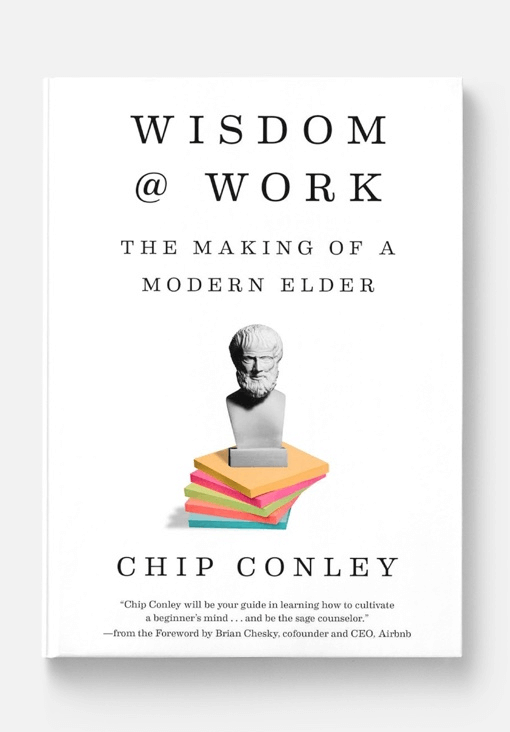
A new book, Wisdom at Work: The Making of a Modern Elder explores members of the workforce who feel this pain. The book, written by 58-year-old Chip Conley, tackles head-on a social dynamic that threatens our workplace. “In a world that venerates the young, many in midcareer sense that the ground is shifting beneath their feet, leaving them feel invisible, undervalued and threatened by the digital natives nipping at their heels,” he writes.

wisdom at workCan you relate? And you don’t even have to reached your sixth decade for this to resonate. In the hyper-youth-oriented tech industry, even 35-year-olds feel the sting of ageism.  “Wisdom at Work” seeks to provide reassurance, along with practical resources, that you are most definitely not too old to contribute. In fact, your age is an asset, if you know how to present it as such.

As a member of the target audience for this book, I was heartened by its message that one’s life experience has value. Conley seeks to liberate the term “elder” from “elderly”, pointing out that the latter is simply how many years you’ve been on this earth, but the former is what you have done with those years. Conley uses the term “Modern Elder” to describe a person who has married their wisdom and experience with curiosity, a beginner’s mind and a willingness to evolve.

Conley has lived the last several years as a Modern Elder in the making. In 2013, at the age of 52, he sold his boutique hotel company and joined Airbnb as head of global hospitality and strategy. His boss (Airbnb’s CEO) was decades younger than him, as were many of the senior management team members. Conley’s experiences as one of the “older guys on the block” led him to explore what it means to age with vitality at work.

Wisdom at Work is Conley’s compilation of  ideas, backed up with demographic data, on how people entering the mid-terms of their work journey can still have meaningful careers. He outlines the characteristics of a Modern Elder (spoiler alert: if you have become complacent, you won’t like a few of his suggestions) and he provides ample anecdotes, examples and reference materials to help you grow in your efforts to see your age as a strength that your employer will value.

I devoured this book. It seems like just yesterday that I was the youngest member of our company’s management team, fresh-faced, energetic and yes, a bit smug about how some of my older colleagues were a bit out of touch. I’m grateful that one of my contemporaries has taken the time to lay out a path for those of us who want to stay relevant. I highly recommend that you pick up a copy of Wisdom at Work.

Chip Conley has created an excellent resource list on this topic. Download the PDF here.

Disclosure: I received a free copy of this book for the purposes of the review. This post also contains an affiliate link, which means if you click the link and make a purchase, I may receive a small compensation.


Article source:Jennifer Miller - How to Become a Modern Elder»

Monday, 27 August 2018

Guest Article: 4 Low-Cost Ways to Develop Your Team’s Soft Skills by Jennifer Miller

hands team soft skillsLeaders are often reminded “what’s inspected gets done.” While this adage is typically applied to measurable task-related behaviors such as productions goals, it’s also relevant for human elements of the workplace like interpersonal skills.

As artificial intelligence makes further inroads into your daily work as a leader, you need to pay attention to soft-skill development because these uniquely human skills are what will differentiate your team members from the bots.

It’s time to elevate soft skills to a topic worthy of frequent leadership inspection. If we are to successfully co-exist with increasingly sophisticated technology, we need to amp up our humanity.

As this Fast Company article suggests, one way to do this is to reward soft skills in the workplace. And by “reward,” I don’t mean “pay.” I mean, put emphasis on the value of conducting business in a respectful, human way.

Here are four ways to develop your team’s soft skills on the job and with minimal financial investment.

Set the stage

As the team leader, it’s your job to ensure team members have ample opportunity to practice job-related and human skill sets. This starts by you giving them context for the importance of developing their whole selves. Help your team members understand that developing their people skills is part of their path to internal career mobility. Explain that employers are looking for both technical and human skills, and that your role as a leader is to pay attention to how they’re progressing on both fronts.

Put soft skills front and center

Celebrate “wins” that highlight people skills. At meetings and team huddles, give equal praise for how something was done as well as what was achieved. “Let’s take a moment to recognize Isabella. She expedited the Acme Company customer order, which helped us keep our 100% on-time metric; she was tenacious and customer-focused without throwing the shipping department under the bus, which would have been easy to do, given the circumstances.”

See the opportunity in challenge

Setbacks provide excellent opportunities to flex soft-skill muscles. Whether it’s a project that crashed and burned or a brewing team conflict, leaders who coach employees through the speed bumps of organizational life are helping team members build a portfolio of critical soft skills: conflict resolution, negotiation, adaptability and creativity. When the whining and complaining ensues (and believe me, it will), stay resolute. Say, “Yes, this is a pain. And we will work together to get to the other side of it.”

Get clear about what good people skills look like

It’s fine to keep it low-key and casually do the fist bump and “Nice job!” thing with team members. But every so often, you need to go deeper and give detailed feedback. Highlight specific things your employees said or did that demonstrate their strength in soft skills. For example, say, “Jody, I know that you’ve been frustrated with the new purchasing software. I admire how you kept your cool at the status meeting and stayed focused on finding a solution, rather than getting into the weeds about the bugs in the system.”

Paying attention to stuff — whether it’s the latest app upgrade or a team member’s need to learn tact — ensures it gets done. The modern workplace demands that your employees have top-notch soft skills. Help your team members shine by developing their human skills in equal measure with their technical skills.


This article was published as a Smartbrief Original and is reprinted with permission.


Article source:Jennifer Miller - 4 Low-Cost Ways to Develop Your Team’s Soft Skills»

Monday, 6 August 2018

Guest Article: Here’s What AI Means for Your Leadership by Jennifer Miller

woman as robot

Will artificial intelligence change the way you lead? Yes, and probably in ways that were unthinkable even a few years ago. There’s a lot being written right now about how AI will affect the white-collar workforce. Jobs once thought immune to automation due to their extensive need for human analysis are now seen as AI’s next target.

Career coach Dana Theus says the bots are already poised to change the game for leaders. In her article “Managers, Are You Ready to Hire Bots onto Your Teams?” Theus predicts, “Whereas a year ago I would have told you that the experts were saying such advancements wouldn’t mean major job changes for most office workers, today the experts are saying that almost every job will be affected in the next decade, or sooner.”

What does all of this mean for the everyday leader in the trenches? Before anybody runs through the streets like some workplace version of Chicken Little, yelling, “the bots are coming!” let’s consider what an AI workplace really means for you and the team you lead.

It’s part of the workplace’s evolution. When you view the discussion of artificial intelligence as nothing more than a continued exploration of the workplace, it becomes less threatening. Think of any technological advancement that you’ve personally experienced over the past decade or so. At its inception, there were most likely enthusiasts and naysayers. But over time, the new technology settled in and became part of the workplace fabric. Adding AI to the mix is just the latest iteration of an ever-evolving discussion of how humans get work done.

To survive, develop the whole person. It’s the very quality of being human that still sets us apart from AI. Even though bots continue to advance their ability to mimic the human mind, we still have the edge on soft skills such as collaboration and empathy. Now, more than ever, team members need to develop their technical and their interpersonal skills. Are you developing people to their fullest human potential? Given that the World Economic Forum estimates that 10 of the 16 most critical skills for the workplace are soft skills, savvy leaders will continue to place equal emphasis on job-specific skill development as well as interpersonal skills.

Reflect on how you lead. Leadership, while typically already seen as a wholly human endeavor, will still need to adapt. Nobody will be immune to advances in technology. What’s a leader to do? Tech expert Paul Roehrig sums it up nicely in this Fast Company article in which he advises, “to beat the bot, you need to be more human.” And the more human, the better. Qualities such as compassion, mindfulness and selflessness are now seen as the foundation for effective leadership. Give consideration to how you stack up in these often overlooked leadership traits.

Get ready for a bot/human team. Theus advises leaders to “future-proof” themselves and their team members. Rather than being merely tools that humans use, bots will soon be part of a hybrid team of machines and humans.  “To stay ahead of the curve on these kinds of market shifts, you need to start thinking about how you produce results using both human and automated team members,” she writes. As unsettling as it might be to think about a bot as a team member, the way to stay ahead of the game is to double down on helping your human team members do what they do best: create, connect and bring human energy to their work endeavors.

AI will soon affect how you lead. Are you ready? Use these four tips to stay ahead of the curve and capitalize on the one element a machine has yet to master: your humanity.

A modified version of this article appeared as a SmartBrief Original and is published with permission.


Article source:Jennifer Miller - Here’s What AI Means for Your Leadership»

Monday, 9 July 2018

Guest Article: Want to Improve Your Leadership? Get Inside Your Head by Jennifer Miller

As leaders, you’re often told to that in order to stem overthinking, you need to “get out of your head.” And while it’s true that too much introspection causes either oversimplification or excessive rumination, a new leadership book suggests that you should consider what’s going on in that noggin of yours.

Want to improve your leadership? The place to start is your mind.

In “The Mind of the Leader: How to Lead Yourself, Your People, and Your Organization for Extraordinary Results,” authors Rasmus Hougaard and Jacqueline Carter offer a compelling argument: too much of the $46 billion dollars spent annually on leadership development focuses on improving the external drivers of behavior such as setting strategy, managing resources and offering incentives. This focus misses an important element in developing leaders: their mental mindset.

Hougaard and Carter argue that leadership starts with three core mental qualities — mindfulness, selflessness and compassion — that comprise “MSC Leadership.”

Mind of the LeaderSo, yes, the authors invite you to take up residence in your mind and get comfortable there. Leadership, it would seem, is an inside job. If that sounds a bit squishy for your taste, consider this: the book is based on findings from hundreds of research studies showing the benefits of mindfulness, selflessness and compassion for individuals, leaders and organizations. The authors also engaged leading scientists and a team of researchers to contribute and provide validation.

Moreover, the book is based on survey results from nearly 35,000 leaders from over a hundred countries, which provides the real-life examples that demonstrate how these mental qualities can help create what Hougaard and Carter call “a more human leadership and people-centered culture.”

How is it that these new-age sounding qualities are the foundation of strong leadership? Hougaard and Carter point to understanding the power of intrinsic motivation — and a leader’s ability to harness it — as the means to unleash optimal performance of their workforce.

Without a clear understanding of what motivates people, “even technically gifted and well-intentioned leaders can unknowingly create an indifferent — or even hostile — work environment,” they write. Leaders who manage their mind in a way that creates less unconscious bias will be able to see the potential of their people and therefore will foster a stronger sense of commitment with their team.

Here are three ideas offered up by Hougaard and Carter that will help you develop these important leadership traits.

  1. Mindfulness is the ability to focus your attention. Start a practice of blocking at least 15 minutes out on your calendar every day that is devoted to disconnecting: no phones, emails or other distractions. Practice sitting quietly (or go for a brief walk), allowing your mind to simply be quiet.
  2. Selflessness is the ability to let go of your ego and give your people the space to do what they do best. Consider what the words “being of service” mean to you. Identify one way you can better serve someone in your organization or the broader community. Note: Many times, being of service is a simple, easy act, such as sitting and listening to someone in need.
  3. When you offer compassion as a leader, people feel safe and connected.  Research has shown that actually practicing compassion for a few minutes each day measurably increases your ability to feel compassion for others. To develop compassion for your colleagues, think about someone who is struggling. Sit quietly and imagine how they are feeling but do not mentally take on their burden. Instead, imagine offering them support and compassion.

Are you placing too much emphasis on the external factors that drive your leadership effectiveness? Maybe it’s time to re-evaluate your mental game. Get inside your head and decide what role mindfulness, selflessness and compassion can play in upping your leadership game.

This post originally appeared as a SmartBrief Original and is published with permission.


Article source:Jennifer Miller - Want to Improve Your Leadership? Get Inside Your Head»

Thursday, 28 June 2018

Guest Article: 3 Communication Tips to Help You Be a Better Leader by Jennifer Miller

unlock communications

Do you have a colleague that irritates you with his “ahs,” “ums” or protracted silences? Leaders are taught that strong orators remove superfluous words and awkward silences from their presentations, so it makes sense that you might take a dim view of these speech patterns. But even though Sam from Accounting might drive you to distraction with his verbal tics, these words (or lack thereof) actually serve a purpose in conversation. Here’s how to crack the code on this uniquely human communication pattern so you can better connect with your colleagues.

Verbal fillers as traffic signals

Linguistics professor N.J. Enfield, at the University of Sydney in Australia has studied the role that words such as “ah” and “um” play in conversation. It turns out that these words act as “traffic signals” in human communication, signaling to others in the conversation when to chime in and when to hold up. (Although animals communicate with one another, they don’t consider how their communication methods affect other animals, which makes this “traffic directing” uniquely human.) In this Atlantic article, Enfield describes these words as cues that tell the listener, “I’m still forming my thought . . . give me another moment.”  The leadership take away? When talking with someone, learn to view these verbal fillers as a request for a few more seconds of airtime for the speaker, rather than losing patience or seeing the person as less credible.

Is your conversation a competition?

Leaders may also perceive the space created by verbal fillers as an opportunity to form one’s response. This frames conversation as a competition, where listening carefully is the means for finding flaws in logic or formulating a rebuttal, say leadership consultants Jack Zenger and Joseph Folkman.  “That might make you an excellent debater, but it doesn’t make you a good listener,” write Zenger and Folkman in this Harvard Business Review article. “Good listeners may challenge assumptions and disagree, but the person being listened to feels the listener is trying to help, not wanting to win an argument.”  To boost your leadership listening skills, think of your conversations with people in a cooperative, “give and take” light, allowing for your team members to, “gain energy and height [with the flow of conversation], just like someone jumping on a trampoline” offer Zenger and Folkman.

Using silence to build connection

The phrase “silence is golden” rings true for leaders trying to encourage meaningful conversation. But, as linguist Enfield points out, leaders face an uphill battle because in one-to-one conversation, “a full second is about the limit of our tolerance for silence.” So do use silence—to build a connection with others—but do so with the proper intent. Leadership coach and author Peter Bregman writes, “If you treat this silence thing as a game, or as a way to manipulate the views of others, it will backfire. Inevitably you will be discovered, and your betrayal will be felt more deeply. If people are lured into connection, only to feel manipulated, they may never trust you again.” Leadership tip: discern the reason for the silence. If it’s because the speaker needs more time to formulate a thought, but you’re tempted to jump in to “help” them with their words, silently count to 10 in your head before replying.

Far from being annoying habits to be squashed, some verbal habits actually serve a purpose. Astute leaders will pay attention to the communication cues they’re being offered and respond accordingly. Doing so will garner you a reputation for communication excellence.

This post originally appeared as a SmartBrief Original and is published with permission.


Article source:Jennifer Miller - 3 Communication Tips to Help You Be a Better Leader»

Monday, 9 April 2018

Guest Article: 7 Reasons Leaders Should Focus on Developing Employee Soft Skills by Jennifer Miller

7 reasons leaders soft skills

Why are we still talking about the importance of leaders developing employee soft skills?

Here’s why: the more that automation in all of its forms become part of our daily work lives, the more we need to bring to bear the one thing that a machine will never be: human.

And that humanity is most often talked about in the context of developing “soft skills”—those uniquely human traits that allow us to grease the wheels of human interaction. Here are seven reasons leaders need to focus on developing their employees’ soft skills.

Soft skills never go out of style. The term “soft skills” was coined in the early 1970’s as part of a US Army training manual, but the idea has been around forever: “people skills” are important. What you learn about the latest tech will be obsolete in months (or weeks!) but your ability to read someone’s emotions and respond appropriately will always have value.

We can always get better. When it comes to being more human, there’s always room for improvement. Think about it, do you know anyone who is perfect 100% of the time at listening, verbal communication, demonstrating empathy. . .  really, any number of other soft skills?

Soft skills are crucial in today’s workplace. According to this Deloitte white paper, 60% of “crucial proficiencies” as identified by the World Economic Forum are non-technical.

STEM focus might negatively impact social skills. It’s anecdotal, but there is a feeling from hiring managers that the focus on churning out STEM-educated students may also diminish their soft skill abilities once they hit the workforce.

Technology in general has affected how younger employees interact. According to this Fast Company article, younger employees are deemed lacking in collaborative skills as well as general communication skills such as making phone calls and presentations. They’re much more comfortable texting or Snapchatting someone.

Your white collar job is not safe from bots. All sectors of work are being affected by automation and artificial intelligence. The best line of defense for your employees (and you too!) is to develop your social and emotional intelligence.

You will soon lead a human/bot hybrid team. Dana Theus, career coach and workplace futurist, asks us to consider a team composed of humans and bots—a team where leaders must manage robots and humans with equal skill. Although it’s still likely years away for most managers, making this mindset shift now can mean the difference between thriving as a leader and obsolescence.

Soft skills, people skills, emotional intelligence—whatever you phrase you use for the term “being good with people”—remain as important as ever for workplaces. Automation will not fully replace leaders, as long as they learn to work with technology, not against it.


Article source:Jennifer Miller - 7 Reasons Leaders Should Focus on Developing Employee Soft Skills»

Tuesday, 13 March 2018

Guest Article: Lead Like a Human, Not a Manager by Jennifer Miller

In today’s fast-paced world of business is it possible to bring humanity back to leadership? A new book backed by research and co-authored by a Harvard Business Review contributor aims to answer that question for you.

In The Mind of the Leader: How to Lead Yourself, Your People, and Your Organization for Extraordinary Results, authors Rasmus Hougaard and Jacqueline Carter offer a simple, yet compelling thesis for what makes a strong leader: it all starts within. Although the premise isn’t new, what makes this leadership book fresh is the amount of research that went into backing up their claim that it’s the internal workings of a leader’s mind that drives their effectiveness.

Hougaard and Carter write that three core mental qualities–Mindfulness, Selflessness and Compassion– form the foundation upon which leadership effectiveness is built. The Mind of a Leader draws upon an extensive literature review of neuroscience, psychology and organizational theory, and assessments of over 35,000 leaders from over a hundred countries.

The book lays out its central theme very well: As human beings we are all driven by basic needs for meaning, happiness, human connectedness and a desire to contribute positively to society. When leaders respond to these human needs with mindfulness, selflessness and compassion, they set the stage for a more productive work environment where all people feel energized and valued for their contributions.

How The Mind of the Leader Was Born

I first learned of Hougaard’s work with mindfulness during his presentation at the 2016 WorkHuman conference. Since then, I’ve followed his research with interest. Along the way, I met his colleague Jacqueline Carter. Both work for Potential Project and have extensive backgrounds in organizational and leadership development.

I wondered how the writing team moved from the topic of “mindfulness” to a broader, three-pronged approach to leadership. I reached out to the authors and here’s what I learned:

For over the past decade, Hougaard and Carter, along with their colleagues at Potential Project, had been helping leaders and organizations enhance performance with mindfulness. In recent years, they noticed that as important as mindfulness is for leaders, it wasn’t enough. Through their interviews and research, Hougaard and Carter identified additional qualities as core to enabling greater engagement, creativity and performance.

Here’s how Carter sums up the three elements of their leadership model: “To be successful today, leaders must be mindful – being present and attentive to their people’s needs; selfless – to model cultures based on growth and learning instead of ego; and compassionate – to show their people they have their back.”

In the LinkedIn article, How Leaders Must Lead for a Hard Future, Hougaard puts it this way: In a rapidly changing world, with hard challenges coming our way, we need leaders with minds who can respond mindfully, with selfless confidence and wise compassion.

Practical Tips for Leading Yourself, Your People and Your Organization

One of the best things about this book is the authors take what some view as “soft” topics and give concrete examples of how these ideas play out with real-life leaders. Not only are the excellent examples from a wide selection of industries and companies, the Hougaard and Carter also offer instructional “training” sections and “quick tips” for each segment of the book.

My Recommendation for The Mind of the Leader

This book is well-written, flows logically and provides excellent real-life examples of how to employ the three “core mental attributes” in a business context. For those who respond well to visual depictions, each of the three key sections has a corresponding matrix to help the reader ground themself in the concept. Although this book is written for those in leadership positions, the “tips” and “practices” suggested would be helpful for anyone wanting to become a more well-rounded individual capable of dealing with life’s stresses.

To learn more about this book, visit the book’s page at Potential Project.   Hint: if you scroll down the page, there is a video presentation that Rasmus made at WorkHuman 2017. It’s an excellent overview of the three key mental attributes of mindfulness, selflessness and compassion.


Disclosure: I received an advance copy of the book for the purposes of writing this review. Some of the links are affiliate links. Please form your own opinion about the materials I review on my website. Just because I liked it, doesn’t mean that you will.


Article source:Jennifer Miller - Lead Like a Human, Not a Manager»

Monday, 5 March 2018

Guest Article: Leadership Tips for Supporting Mental Health in the Workplace by Jennifer Miller

“I asked you here today to let you know where I’ve been for the past month. I was in a mental health facility.”

So began a conversation with a colleague that I admired tremendously.

His confession surprised me; we had worked on a long-term project together just three months prior. I had no idea he was suffering. Even more surprising was the ease with which he shared his news. Business associates rarely discuss the state of their mental health. But there we were, noshing on the lunch special at our favorite Chinese restaurant, discussing his condition with refreshing candor.

Gavin* explained to me that he’d not been feeling himself for many months; work pressures had been piling up and he wasn’t coping well.

“I reached a breaking point … I had what I guess you’d call a nervous breakdown,” he stated matter-of-factly. He continued, “I wanted to tell you personally because I value our friendship. And, I know that people are talking about it and I wanted you to hear it from me personally.”

What makes this story even more amazing is that this conversation occurred over 20 years ago. Gavin was way ahead of the curve in terms of transparency about his mental health. Today, the conversation about mental health has started to come into the mainstream with well-known people such as Prince William, Kate Middleton and Prince Harry raising awareness with their Heads Together program.

Even with these awareness-building efforts, there’s still a huge stigma attached to talking about mental health in the workplace. Though rarely discussed, mental health challenges are more common than you might realize. According to the Center for Workplace Health, “1 in 5 adults will experience a diagnosable mental illness in any given year” and only half of those with the illness will seek treatment.

The cost to businesses is staggering: according to the the World Health Organization it’s estimated that the global economy loses $1 trillion a year due to lost productivity associated with mental health conditions.

Few of us outside the counseling and psychiatric professions have the training or experience to know exactly what to say or do when it comes to issues of mental health. This puts leaders in a difficult place because it’s their job to create a healthy workplace environment — one that promotes both physical and mental well-being.

Would you know how to respond if a peer or direct report shares their story of a mental health challenge with you? Here are three measures leaders can take to appropriately support the mental well-being of their workforce.

How to provide a supportive response

The most important thing you can do for someone who shares their (or a family member’s) challenge with mental health is to stay nonjudgmental and supportive. Keep it brief and affirm their decision to come forward with the information. Try a supportive phrase such as:

  • I hear you.
  • I see that this is painful for you to discuss.
  • I understand that is difficult for you.
  • Thank you for trusting me with this information.
  • It takes courage to speak up. Thank you.

Things to avoid when talking about mental health issues

Nobody expects leaders to diagnose or treat a physical condition such as diabetes, and the same goes with mental health. If your company has an employee-assistance program, refer the person to that program or to the HR department.

It’s also best to avoid giving advice, pep talks or stories of someone with a similar situation. Even if you’ve been in a similar situation, it’s not helpful for the other person to hear the details of someone else’s pain.

Reducing the stigma about mental health conditions in your organizational culture

Leaders set the tone for the way that people treat each other in their everyday actions. In the same way, leaders can create a culture where it’s OK to talk about mental health in the same way as one discusses hypertension, migraines or low blood sugar — all conditions that may affect one’s work day.

The Leading a Mentally Healthy Toolkit, compiled by a consortium of mental health professionals and business leaders, notes that reducing stigma will help people seek the help they need. Just as my friend Gavin calmly and matter of factly discussed his condition and treatment, leaders can normalize the existence of conditions such as anxiety, depression or post-trauma disorders.

At work, we don’t typically hide the fact that someone had open heart surgery or a cancer diagnosis. It should be the same for a mental health diagnosis. As the Center for Workplace Health points out, “respecting and treating mental illness on par with other medical illnesses is the first step to improving employee quality of life—the foundation of an effective workplace.”

As a leader, you have the opportunity to help pave the way for creating parity between how your organization deals with its employees’ physical and mental well-being. Keeping these three tips in mind will help you do so.

*Not his real name. Unfortunately, we are not yet at a place in our society where I feel comfortable sharing his name publicly.

A modified version of this post appeared as a SmartBrief Original and appears with permission.


Article source:Jennifer Miller - Leadership Tips for Supporting Mental Health in the Workplace»

Monday, 26 February 2018

Guest Article: Leaders Who Know When to Shut Up Get Better Ideas from the Team by Jennifer Miller

woman listening

For many years, I worked with a highly effective (and very respected) leader named Jack, who at the time was a senior executive at a large insurance company.

After working together on a few corporate projects, Jack asked me to lead a three-day strategic planning session for his team. About two hours into the first day of our meeting, I noticed something unusual: Jack had contributed very little to the discussion. Aside from opening remarks and the occasional clarifying statement, Jack sat leaning back in his chair, quietly observing.

This “quiet Jack” was a departure. My interactions with him were usually conducted with groups of 3-4 people, in which his demeanor was assertive, sometimes to the point of being confrontational. Known as a hard-charging, results-oriented manager, Jack liked to “stir the pot” in small group settings to challenge people’s assumptions and test their convictions.

Why the quiet stance? I asked him at a break on the second day. “Because if I don’t shut up and listen, I won’t learn anything,” he replied.

Fair enough. (Jack is a man of few words. That was the sum total of our conversation.)

One of the reasons Jack was so respected as a leader is that he had learned to distinguish the circumstances under which he should speak up—and those in which he should stay silent. In small group meetings, his aim was to move the conversation along with his challenging statements. In a larger group setting (in this case, a strategy-setting meeting), Jack knew that it was important to hear from all parties without influencing them with his opinions.

Although most leaders would say they want to foster a speak-up culture, many are inadvertently quashing ideas before they can come to light. As this white paper on Groupthink by Northwestern University’s Arpita Das Behl explores, numerous studies have shown that when leaders state their opinion, the group tends to move their opinions towards those of their leader. This form of “follow the leader” often leads to erroneous assumptions and faulty decision-making.

When deciding whether or not to speak up in a group setting with your team, answer this question:

Will adding my input draw attention to me as a leader and away from the focus at hand?

For example, if you say, “I think we should …” or “My viewpoint is …” you’ve brought yourself into the conversation and might unduly influence the team’s opinions on how to proceed.

This idea of leaders who understand the importance of leadership silence was recently driven home during an HR executive panel I attended in Phoenix last month at the WorkHuman conference. Vicki Williams, the senior vice president of compensation, benefits and HR information systems for NBCUniversal, told the audience that a mentor once shared with her: “Leaders who don’t listen will soon find themselves with people who have nothing to say.”

Williams said that this advice has guided her throughout her career. And, as a leader of leaders, it’s wisdom she readily passes along to her team.

Adam Grant, professor of management and psychology at The Wharton School and author of books including “Originals: How Non-Conformists Move the World,” spoke at the same WorkHuman conference. He echoed Williams’ line of thinking when he said leaders need to “make it safe for team members to exercise voice.”

As a leader, if you must speak, says Grant, speak after everyone’s input has been heard. And, as Grant offers in this interview with Marketplace’s David Brancaccio, if you’re an extroverted leader, you’re going to have a more difficult time zipping your lip.

Extroverts, says Grant, “love to be in the center of attention.” And this need for the spotlight can draw attention away from less talkative members of the group.

At your next meeting, take a page from my mentor Jack and remember that the best way to learn something is to shut up and listen. If inspiration strikes you in the middle of the team meeting, and you’re worried you’ll forget that great thought, jot it down. If the idea is truly that fantastic, it can wait. And it’s highly probable that in the silence of your listening, an even better idea will soon emerge from the group.

A modified version of this post appeared on SmartBrief and is reprinted with permission. It was one of SmartBrief’s top leadership posts of 2017.


Image credit: Pexels


Article source:Jennifer Miller - Leaders Who Know When to Shut Up Get Better Ideas from the Team»

Monday, 19 February 2018

Guest Article: Renewing Your Leadership Purpose with Compassion by Jennifer Miller

Years ago, when I was a 23 year old assistant human resources manager at a department store, one of our sales associates suffered a heart attack and died while at work. At the time, I was out of town, attending my grandfather’s funeral. Upon my return to work, my boss Mary told me what had happened and carefully gauged my reaction. She was concerned about me suffering two losses in quick succession. When I assured her I was OK, she asked me to check in with Scott, the department manager of the gentleman who had died. Scott had also experienced two recent losses: the death of his mother just a month before the passing of his co-worker. Mary thought it would be helpful for me to talk with Scott because we were the same age and socialized outside of work.

Later that day, as Scott walked into my office, I thought, “What in the world can I possibly say to this man that will help him?” There we were, two young people trying to figure out how to navigate a fast-paced work environment that, frankly, required us to “get on with it.”  In the end, I settled for a simple, direct approach. I asked Scott how he was doing, offered my support and then settled in to simply “be” with him in silence for a few moments of acknowledged sadness. Given my inexperience in such matters, it was the best I could offer in the form of compassion but it seemed to suffice.

Suffering has a way of creeping into even the most benign of workplaces. And leaders are in a unique position to, “both create and alleviate suffering,” write authors Monica Worline and Jane Dutton in the book “Awakening Compassion at Work.”  Worline and Dutton have researched the topic of compassion in the workplace and conclude that, unlike the positive psychology concepts of gratitude and happiness, compassion is an interpersonal concept that is linked to the darker side of the human experience. “Compassion goes hand-in-hand with suffering,” the authors write. Even though the topic of suffering is a heavy one, Worline and Dutton point out a positive element: the chance for leaders to renew themselves through the display of compassion.

Breaking the Cycle of Continual Leadership Stress

Leadership is fraught with the stress of daily decisions and competing priorities. In the article “Mindfulness, Hope and Compassion: A Leader’s Road Map to Renewal,” authors Annie McKee, Frances Johnston and Richard Massimilian put forth the concept of learning to manage the leadership cycle of “sacrifice and renewal.” They write that, “leaders cannot sustain their effectiveness if they cannot sustain themselves. Leaders must deal with ‘power stress’ caused by a combination of responsibility, constant self-control and the inevitable crises, both small and large that the leadership role demands.” Failing to do so causes what McKee, et al. call “Sacrifice Syndrome,” a cycle that leads to continued stress and eventual burnout. One way to help break the cycle is to exhibit compassion, which rests on caring about others in a profound way. Doing so puts the focus on someone else, which allows you to set aside your problems for the moment. I certainly found this to be true when I sat down with Scott to ask him how he was doing after the sad events that had in my own life.

The Unexpected Benefit of Compassion in Business

Compassion can exist within the business environment. McKee and her colleagues see an unlikely connection to a key business skill: inquisitiveness. They write that leadership compassion springs from a natural source. “Compassion is natural. Why? Because compassion starts with curiosity about other people, what motivates them and how the world outside of our own actually works.” This curiosity–to know someone not because of the salacious details we might glean, but to genuinely walk alongside them in their time of suffering–is what makes a great leader. “Generosity grows for the suffering that may sometimes make work life messy and difficult. Leading with compassion restores our belief in a better future so that we can feel our way forward together,” offer Worline and Dutton.

The Power of Tuning In

You may have heard the phrase, “Are you a human being or a human doing?” Far from just another thing on your To Do list, dialing in to others can actually help renew your energy and refocus on your leadership purpose. “To lead with compassion requires that leaders weave more attention to the full human state of others into their work relationships” write Worline and Dutton. Tuning in to someone requires you to simply “be” in the moment, hearing what someone is saying. Observing for what they are “saying” with their body language, but not their words. Intuiting for the right words of comfort to offer. This is the approach I took with my colleague Scott. After a couple of minutes of conversation, it was clear he did not wish to explore his sadness while at work, so I settled for a few brief words of support and let it go at that.

All humans experience suffering.  We can’t expect the pain to conveniently check itself at the door when employees arrive at work. Compassion isn’t the easiest of emotions to display for some, but demonstrating care for a person who’s suffering elevates a person from “manager” to “leader.”

Who is suffering today, and how will you care for them? How will you renew yourself through compassion?

A modified version of this article appeared as a SmartBrief Original and is reprinted with permission.


Article source:Jennifer Miller - Renewing Your Leadership Purpose with Compassion»

Wednesday, 14 February 2018

Guest Article: Real-World Ideas for Developing Your Team by Jennifer Miller

What does internal career mobility look like at your company? Maybe it’s a fancy program spearheaded by your HR or talent development team. Or maybe it’s a boot strap operation with limited funding. Providing your employees with “career mobility” inside your organization starts with you, the leader, providing professional development opportunities.

No development dollars, you say?

No problem. I checked in with three resourceful leaders who make professional growth a priority. And they do it on a shoe string budget. Go check out my latest SmartBrief contribution  with No development budget? Internal career mobility is still within your reach, which chronicles specific ideas for how to help your staff grow professionally, even if time and dollars are limited.


Article source:Jennifer Miller - Real-World Ideas for Developing Your Team»

Monday, 27 November 2017

Guest Article: Resources to Counteract Mean and Nasty in the Workplace by Jennifer Miller

kindness quote aesopIn November, people observe World Kindness Day, which was started in 1998 by an international coalition of non-governmental organizations (NGOs) that wanted to shine a spotlight on the positive power of being kind. There are many corners of the world right now that are just plain mean and nasty. Incivility has always been part of the human condition. But with social media, we can see everyone’s Mean and Nasty, 24/7, brought right into our homes and workplaces, without any filters. It’s exhausting and it affects our mental health.

Here are what the numbers tell us about Mean and Nasty in the workplace:

  • 40% of workers are afraid to be civil at work because they fear others will take advantage of them
  • Colleagues who observe incivility are three times less likely to be helpful to others in the future and 50% less likely to share resources
  • Incivility is often modeled by leaders and is the reason that employees cite for their own rude behavior

This research comes to us from Christine Porath, an associate professor of management at Georgetown University and the author of Mastering Civility: A Manifesto for the Workplace. Porath has studied incivility for over two decades and has performed numerous experiments to suss out why civility is important in our workplace interactions.

In honor of World Kindness day, here are some of my favorite blog posts and resources:

Manners Matter at Work

15 Ways to Be Nice at Work

Leadership and Positive Social Contagion

The Science of Kindness from the Random Acts of Kindness Foundation

Spread a little kindness at work today. It takes so little effort, and costs nothing.


Article source:Jennifer Miller - Resources to Counteract Mean and Nasty in the Workplace»

Tuesday, 21 November 2017

Guest Article: Leadership and the Civil Workplace: It Starts with You by Jennifer Miller

civility welcome matDid you know that nearly half of the people in your organization are afraid to be civil to one another? According to Georgetown University researcher Christine Porath, 40% of employees say they hesitate to show civility at work because they fear people will take advantage of them.

Porath, an associate professor at Georgetown’s McDonough School of Business and author of Mastering Civility: A Manifesto for the Workplace, has studied incivility in the workplace for nearly two decades. A great deal of incivility is due to a lack of awareness about our actions, not necessarily evil intent, explains Porath. The workplace—with its reliance on technology as a primary means for communication—increasingly distances us from face-to-face interactions. This in turn makes many of us a bit rusty on the social niceties necessary for a high-functioning workplace.

Has your office become a less civil place to work? If you’re in a leadership role, you have far more influence than you might realize regarding how others treat one another. Here are three things to consider when it comes to creating a more respectful workplace.

What norms are you setting around civility?  

Leaders set the norms for their organizations. People watch what you do and determine what passes as acceptable behavior. Leaders who step up and “go first” in terms of acknowledging their civility shortcomings experience better success in creating a respectful environment than those who simply send employees to civility training (yes, that’s actually a thing.) Porath cites an example of an international law firm whose head partner brought in Porath to provide training on civility. Not only did the head partner participate in the training, the firm’s chairman of the board participated. “About a year and a half after we began our work together, the firm won a Best Place to Work award,” notes Porath, something that would have been unlikely just a couple of years earlier.

Beware the contagion of incivility

Unfortunately, bad behaviors can be as contagious as a flu bug. Research has shown that we unconsciously mimic behaviors of those around us, including rude behavior. Start with your own actions: reflect on your emails, texts and in-person communication with your team. You may think you’re in the clear, but perhaps your attempt at being a good role model is being sabotaged. Next, consider your entire team. Heads up—it’s not just the rude folks who are spreading the malaise. Porath’s studies found that even if people aren’t personally rude, they can be “carriers” of the scourge. People who observe incivility are three times less likely to be helpful to others and 50% less likely to share resources.

Civility is good for you and your team

The good news is that civility is just as easy to spread as incivility. Simple gestures such as smiling, saying “please,” “thank you”, and “I’m sorry” help pave the way to a more civil workplace. Extending courtesy also help keeps you healthy. According to the Random Acts of Kindness Foundation, you benefit physically and emotionally  when you show basic courtesy to others. Kindness also has a “domino” effect: research shows that when a group of people witness a positive act of kindness, everyone’s mood is improved, thereby making them more likely to pass along another act of kindness. This means that as a leader, your courteous acts when in team meetings and other group settings are amplified. It takes very little of your time to “get the ball rolling” and set a positive example of respect.

Writer Christian Nestell Bovee is credited with the words, “The small courtesies sweeten life; the greater ennoble it.” Are your actions as a leader ennobling or eroding the daily life of others in your workplace?


This post originally appeared in Smartbrief’s Originals series and is reprinted with permission.

Image credit: Paul Mison.


Article source:Jennifer Miller - Leadership and the Civil Workplace: It Starts with You»

Monday, 30 October 2017

Guest Article: What Does it Mean to Work Human? Join Me in Austin, Texas to Find Out by Jennifer Miller

Would you like to bring a bit more humanity into your workplace? Who wouldn’t? Sometimes our work lives make us feel like numbers on a spreadsheet. As an antidote to the daily grind of the workplace, I attend the WorkHuman conference to hear the best and brightest talk about the science behind human motivation, happiness and performance—and how those things contribute to a company’s bottom line.

I’ve written about why the WorkHuman conference is on my A-list for attendance. Their keynoters are top-notch; Michael J. Fox’s wisdom was straight from the heart and Julia Louis-Dreyfus’ down-to-earth relatability was palpable. This year, we’ll hear from New York Times bestselling authors Brene Brown and Adam Grant, with more keynoters to be announced. And the break out sessions, with topics such as, “Humanizing Your Employer Brand” and “Crowdsourcing and the Performance Revolution” provide real-life case studies from employers who are helping employees bring their best selves to work.

What’s it like to “work human?” How about if you join me for WorkHuman 2018 in Austin, Texas and see for yourself?

The WorkHuman Super Saver price of $895 ends Tuesday, October 31st. After that, the price moves to the Early Bird price of $1,195, which is good until December 31, 2017. After that, the price increases.

And, to sweeten the deal, I’ve got a discount code for you. You’ll save $100 off your conference fee when you enter “WH18INF-JVM” during your online registration. (My discount code is good no matter when you sign up. It’s courtesy of conference sponsor Globoforce.)

Register here.

It would be wonderful to spend time together helping advance the WorkHuman movement, to help business professionals engage the whole human at work while achieving business results.


Article source:Jennifer Miller - What Does it Mean to Work Human? Join Me in Austin, Texas to Find Out»

Wednesday, 11 October 2017

Guest Article: 5 Human Capital Management Trends by Jennifer Miller

There’s a lot going on in the Human Capital Management (“HCM”) industry. My role as writer and industry analyst affords me the chance to interact with many thought leaders in this arena. I recently wrote a round-up of emerging HCM trends that have implications for HR and business leaders, especially as it relates to employee development. In it, I cover a wide range of topics from artificial intelligence, to design thinking in human resources, to compassion as a leadership competency. Check it out over at InPower Coaching’s EQ@Work blog, in 5 Employee Development Trends in Human Capital Management.


Article source:Jennifer Miller - 5 Human Capital Management Trends»

Thursday, 5 October 2017

Guest Article: Is Failure to Speak Up Impeding Your Team’s Productivity? by Jennifer Miller

woman hands over mouthAs a leader, you know that productive employees bring value to your team.  Recent findings from a white paper by consulting and training firm VitalSmarts highlight the magnitude of high performers’ productivity: they are 21 times less likely to experience tasks or responsibilities that “fall through the cracks.” Moreover, the research found that these same employees were also 18 times less likely to feel overwhelmed than their less-productive peers. Somehow, these hard-working, productive employees have found a way to deliver results without sacrificing their mental health.

What’s their secret?

VitalSmarts’ research reveals an answer that, on the surface, isn’t surprising. The most highly-rated employees—those cited as being “high value” to the company—have exemplary work habits in personal productivity.  The productivity practices listed in the white paper are pretty standard fare: being organized, keeping lists, skilled at prioritizing, and so on. It turns out that there is a second element to their productivity success, and it goes beyond their ability to get things done. What sets the top performers apart are a very specific set of communication behaviors. According to the leaders surveyed, highly productive employees, “ask for help,” “aren’t afraid to ask questions,” and “know who to go to” to seek assistance.

In other words, the top-performing employees speak up. But speaking up isn’t always easy to do. Many employees have tried to voice their ideas or opinions, only to be shut down. Team leaders who want to create a “speak up” culture need to foster “psychological safety”— one in which employees know they can raise concerns without fear of retribution or ridicule. “When people feel like they are being attacked [for their ideas], they tend to go into ‘fight or flight’ mode, rather than having honest and forthcoming dialog,” explains David Maxfield. Maxfield is VP of Research for VitalSmarts and he oversaw the research on employee productivity.

According to Maxfield, productivity, communication, and psychological safety are inextricably linked. He believes that it’s possible to have employees who are great time managers, but “still don’t feel there is enough psychological safety to tell their boss they are going to miss a deadline.” Maxfield offers an example of a nurse who notices that a surgeon has failed to wash her hands and decides not to say anything. Clearly, both medical professionals understand the importance of clean hands, so there is something else at play for not speaking up, which creates, “an intentional breakdown of communication because someone doesn’t feel it’s safe” to speak up, says Maxfield.

Fear of speaking up is rarely explored as a barrier to personal productivity. In many ways, getting things done is seen primarily as a task-oriented process, not a communication issue. Yet, as a leader, it’s important to take the human element of productivity into account. Wise leaders understand that silence creates a ripple effect, increasing opportunities for mistakes and misunderstanding, which in turn diminishes productivity.

The next time an employee misses a deadline, drops the ball, or flubs the details, consider if failure to speak up played a role. Ask yourself:

  • Could this error have been prevented if the employee had spoken up?
  • How did I address the employee’s mistake—with anger or blame? Or with a “let’s learn from this” stance?
  • What role do I play as the leader of this team in failure to speak up?
  • What other barriers are preventing people from speaking up?
  • What will I do differently next time to encourage my employees to raise concerns?

There are many possible reasons for why team members don’t deliver the results you expect. Aside from poor time management, consider the possible communication barriers that are contributing factors. If failure to speak up is the cause, you as a leader can help address the problem. Learning to speak up is a vital communication skill for all employees. But it won’t happen if your leadership doesn’t encourage it.

A version of this post originally appeared on Smartbrief as part of their Originals series. It is reprinted with permission.


Article source:Jennifer Miller - Is Failure to Speak Up Impeding Your Team’s Productivity?»

Monday, 25 September 2017

Guest Article: Our Egos are a Problem at Work. But Not in the Way You Think. by Jennifer Miller

no drama masksThe word “ego” carries a lot of baggage, with connotations like: Blowhard. Difficult to get along with. Egomaniac. Middle man to the Id and Superego. Rarely have three letters evoked so much emotional drama. In fact, perhaps you experienced a bit of inner turmoil prior to clicking the link to this blog post. Because, of course, you don’t have a problem with your ego, do you? No, I didn’t think you did.

But here’s the thing: it’s a whole lot easier to see someone else’s ego than it is to see ours. It’s like that little speck of green stuff leftover from lunch that’s stuck in between your two front teeth. You can go along all afternoon, not knowing it’s there. But others do. And then, when you finally see yourself in mirror, it’s like Crap! Seriously?! How long has that been there?

The thing about ego is that we all have one. And we all need one. A healthy ego is an important part of navigating our lives, both inside and outside of work. It’s when our ego gets distorted that the trouble starts. You might not like to hear it, but this distortion is not just the purview of the egomaniac. The distortion is within all of us.

Enter Cy Wakeman, a self-described “drama researcher” and New York Times bestselling author of several business books. Wakeman’s latest book, No Ego: How Leaders Can Cut the Cost of Workplace Drama, End Entitlement, and Drive Big Results   http://amzn.to/2flsGWb published recently. “The ego is the part of the psyche that mediates self-identity and experience. It’s instrumental in governing how we adapt to reality,” writes Wakeman. Having an ego isn’t the problem. The challenge, says Wakeman is that the ego’s main role is to generate drama, or what Wakeman calls, “emotional waste.” Wakeman and her team of researchers define emotional waste as, “mentally wasteful thought processes or unproductive behavior that keeps leaders or their teams from delivering the highest level of results.” Wakeman observes that the ego is an “unreliable narrator” of our reality, because it “delights in the drama it can create.”

Wakeman’s view of the ego is less about confidence and more about about how much you let the stories you tell yourself dictate how you see the “reality” of your situation. If your reality is highly distorted by your ego’s narration (“Why does this always happen to me?” “I can’t believe they let the XYZ department get away with that!” “Here we go again! Yet another change management initiative”) you’ll lose productivity.

So our egos are a problem at work. But maybe not the way that you were thinking about when first started reading this article. Let’s set aside the very real scenario that there are egomaniacs at work and instead examine how all of us (this blogger included) let our egos get in the way of us doing our best work.

Here’s an example from my own experience at work:

When I worked in corporate America, I was lucky enough to work for a great work team leader. My projects were interesting and my colleagues were great people. Nothing to complain about, right? Well, every so often, a dictate would come from the corporate office located thousands of miles away from our field office that would make me seethe with anger. In my view, the requests were unreasonable, the deadline was ridiculous and there was no good business reason for the task we were assigned. I confess that when these “ridiculous” assignments were doled out, I did my fair share of eye rolling. Although I’m more or less a “put on your big girl pants” kinda gal, for some reason, I couldn’t get over the “unnecessary” elements of these requests. So I wasted time each day for several days (or weeks!) in a row fretting about how stupid my assignment was. I even commiserated with others on how “dumb” and “out of touch” the corporate office was.

This, according to Wakeman, was my ego creating emotional waste—concocting all sorts of internal monologues about why the task was unreasonable . . .why it was wasteful and unfair to ask these things of us . . . and so on.

So here’s where the rubber meets the road. You might think, “well, OK Jen, that’s not really all that big of a deal. Everyone gets annoyed with their employers. Who doesn’t vent once in awhile?” And although it’s true we all need to let off a little steam, what happens if we get stuck in the drama? Consider the few minutes each day I let my annoyance get in the way of productivity. (Remember, I’m more or less a “let’s get on with it” person. I certainly wasn’t spending hours each day worrying about this stuff. But I’d bet the more drama-prone among us could rack up an hour or more each day in needless fretting.)

Not convinced? Wakeman’s research indicates that the average employee spends 2 hours and 26 minutes per day in drama and emotional waste. That’s over two hours a day, with people driving what Wakeman calls their BMW’s (Bitching, Moaning, Whining) into their manager’s or HR’s office, “engines idling, wasting fuel and polluting the atmosphere.”

The book No Ego offers Wakeman’s take for how to create an environment of accountability for both managers and employees, one that will lead to a focus on achieving business results together. She stops short of saying, “This is the prescription. Do this and all with be fine.” Her observations are certainly thought-provoking, and not always received positively. Amazon reviewers of No Ego, plus some of Wakeman’s own book club participants expressed concerns about Wakeman’s philosophy, seeing it as too cut-and-dried, or not compassionate enough.

As for me and my ego? I have a different take on the concepts in No Ego. What Wakeman proposes—true, clear-eyed accountability is tough. It’s very uncomfortable to look at ourselves in the mirror and see the green stuff in our teeth. It’s easier to make someone or something else the reason for our challenges. But, as Wakeman is fond of saying, “Your circumstances are not the reason you can’t succeed. Your circumstances the reality in which you must succeed.”

So I’ve been working harder each day to ensure that when I hear the rev of my BMW’s engine, I take a moment to consider: how much of this drama am I helping to create?


Disclosure: I participated in Cy Wakeman’s No Ego Book Club and received a complimentary book for the purposes of this book review. Some of the links in this post are affiliate links. It’s up to you to decide if you find the book reviewed in this post of value.

Image credit: Wikimedia Commons


Article source:Jennifer Miller - Our Egos are a Problem at Work. But Not in the Way You Think.»

Tuesday, 5 September 2017

Guest Article: 3 Tips for More Productivity with Less Stress by Jennifer Miller

When you think “time management,” what are the productivity practices that will make the most difference? We’re always trying to squeeze as much as we can out of our days. But here’s the thing: there are only so many hours in the day and only one of you. I’ve finally surrendered to the fact that there will never be enough time to do everything I want to do. But there’s always time to do the most important things, as long as you have a good system.

Which brings me to a recent conversation I had with David Maxfield, VP of Research for VitalSmarts, and co-author of several New York Times bestselling books, including one of my favorites,  Influencer: The New Science of Leading Change. I interviewed David to learn more about a partnership that the VitalSmarts team has formed with productivity master David Allen, of the Getting Things Done® (“GTD”) methodology.

David Maxfield (identified as “Maxfield” in this post to distinguish him from David Allen) offered me three simple ways to get started on how to create more productivity, while reducing your stress. His suggestions are based on Allen’s GTD model. VitalSmarts research has found that people who follow both effective communications practices and productivity tips like the ones below are 18 times less likely to feel anxious and overwhelmed at home and at work than their less productive peers.

Here is an excerpt from my conversation with Maxfield, along with my personal observations about the productivity tips offered.

Step 1: Capture everything that comes in and out of your head.

Says David Maxfield:

It’s important to have a small number of ways that you can capture ideas, the to-do’s, assignments, tasks. For me, it’s this:  I carry a pad of post-it notes and I have it near me wherever I am. I use my email inbox and I use a pad of blank paper. So, nothing real fancy. But whenever I have an idea or I get an assignment or whatever, I record it on one of those three tools. That’s what I mean by a “small number” of ways. Probably not more than three. Make your tools reliable and simple, so you can catch everything. David Allen is famous for saying,  “Your mind is for having ideas not for holding them.” You’ll be able to create a lot more ideas if you are not busy holding them.

Jen’s reaction to this idea: I like how this system is decidedly low-tech and low cost. Of course, in today’s digital age, you could do an electronic version of note keeping with an app or even simply use the notes feature on your phone. The key thing is, you can’t keep everything in your head; you won’t remember it. One additional thing Maxfield told me: whatever you choose, make it something you can (and will) use. I’ve tried various digital apps and they just don’t work for me, so I’ve moved back to analog for most note-keeping and then once a week, I pull everything into Trello for flagging and project tracking.


Step 2: Clarify everything in your “inbox” from top to bottom at least once every 24 to 48 hours.

Says David Maxfield:

Your “inbox” means all of the data that you’ve captured. Go through your email, go through your post-it notes, go through notes on your lined paper at least once every couple of days and clarify them to determine, “what is the next step that needs to happen here?” And put it where it needs to go. The mistake people make is they use their email as a storage bin. I’ll talk with people who have 300, 400 emails; and it’s not that they’ve never read them. They have read them 12 times, because each time they read them, they say, oh, well I’m not going to do that one yet. But they don’t clarify what the next action would be or where it should go. So I say, “Top to Bottom”: Begin at the top and go to the bottom. Do this once every couple of days to keep things moving forward.

Jen’s reaction to this idea: True confession time: I positively, absolutely, stink at this step. It’s what hangs me up Every. Single. Time. I know David Allen is famous for saying, “get the inbox to zero.” Frankly, I don’t think that’s possible. But I think a person can get a lot closer to zero inbox items by creating discipline around this step. I’m going to attempt to ask, “what’s the next step?” each time I realize I’ve “parked” something in my inbox or To Do list.


Step 3: Take stock once a week.

Says David Maxfield:

Keep a sacred, non-negotiable meeting with yourself, at least once a week, to catch up, to get current, and to align with your priorities. The purpose of this meeting is to check in with yourself: are you spending your time on the right kinds of tasks? So, they include your home, your work, your aspirational goals, your reactive goals. Ask yourself, are these [goals] finding their way into [your To Do list]? It’s a chance to analyze and adjust.

Jen’s reaction to this idea: this is the most important element of the three tips listed. After all, what good is “getting stuff done” if it’s the wrong stuff? I’ve listed this as the third suggestion because it’s the order in which Maxfield listed it. Personally, I would put this first on the list. I’m old-school and learned time management from Hyrum Smith, who espoused a values-based approach to deciding what goes on the To Do list.

The bottom line of these productivity tips:

This 3-step process isn’t brand-new by any means. In fact, Maxfield joked with me that his wife says he only studies things that are painfully obvious. Maxfield told me, “I love it when two things happen: when common sense isn’t very common and when common sense makes a lot more sense than people realize. And I think these principles fall into that category. Very few people do them, but the ones who do them experience incredible benefits, both to their performance and to their stress levels.”

Thank you, David Maxfield for bringing a new focus to time-tested ideas for personal productivity!


Photo credit: Pixabay


Article source:Jennifer Miller - 3 Tips for More Productivity with Less Stress»