Monday, 21 May 2018

Guest Article: Did Google Fake its AI Demo? A Lesson for Employer Communications by Ben

If you’re a nerd or just a casual technology news consumer, you might have heard about the recent live Google Duplex demo with the company’s CEO. In essence, the technology will assist you with those mundane or annoying times when you need to schedule an appointment. Simply tell your device to schedule an appointment for you and it will take care of the whole thing, phone call, scheduling, and all.

Sounds amazing, right? But following the demo, journalists began asking questions of Google. Here’s an article that tipped me off to the issue:

The demo was indeed impressive…  But is it possible that the promise of Google’s advanced artificial-intelligence tech is too good to be true? As Axios noted Thursday morning, there was something a little off in the conversations the A.I. had on the phone with businesses, suggesting that perhaps Google had faked, or at least edited, its demo.

Unlike a typical business (Axios called more than two dozen hair salons and restaurants), the employees who answered the phone in Google’s demos don’t identify the name of the business, or themselves. Nor is there any ambient noise in Google’s recordings, as one would expect in a hair salon or a restaurant. At no point in Google’s conversations with the businesses did the employees who answered the phone ask for the phone number or other contact information from the A.I.

Further, California is a two-party consent state, meaning that both parties need to consent in order for a phone conversation to be legally recorded. Did Google seek the permission of these businesses before calling them for the purposes of the demo? Was it staged in the simulated manner of reality TV? (Source: Vanity Fair)

Lessons for the Workplace

employer communicationsLet’s set aside the debate for now about whether they did or didn’t fake it and instead look at how Google has responded to the questions/criticism. The real issue is that Google has been unresponsive to numerous requests from various sources trying to find answers to these questions. Back to Vanity Fair:

Google isn’t saying. When Axios reached out for comment to verify that the businesses existed, and that the calls weren’t set up in advance, a spokesperson declined to provide names of the establishments; when Axios asked if the calls were edited (even just to cut out the name of the business, to avoid unwanted attention), Google also declined to comment. The company did not immediately respond to a series of questions from the Hive.

The lesson for the rest of us? In the absence of communication, people will believe anything even remotely plausible. In fact, they’ll sometimes believe things that they would otherwise consider totally crazy. It all depends on the volume and variety of information they receive from their leaders. Here are two quick examples:

  • In my piece on why Uber drivers were cheating their scheduling and payment algorithms, I explained some of the ways those individuals fought back against the firm’s rigid policies. The workers didn’t like having a faceless algorithm managing and tracking their every move without a way to have a two-way conversation. I actually write about this concept in the AI for HR book because it’s a cautionary tale for employers not to go too far with algorithms.
  • I wrote a paper recently on compensation transparency and how employers can adopt a more transparent approach (with some practical advice). At the end of the day, workers that feel like their employer isn’t sharing information with them will assume that their peers earn more or that they are getting an unfair deal. By being more transparent about compensation strategy and processes employers can have a more productive dialogue with workers on pay.

What takeaways did you get from today’s discussion (other than the fact that you’re pumped about Google Duplex scheduling your next hair appointment)? 


Article source:Ben - Did Google Fake its AI Demo? A Lesson for Employer Communications»

Check out more of Ben Uebanks' work at Upstart HR

Thursday, 17 May 2018

Guest Article: Does Your HR Career Leave an Impact? [Podcast] by Ben

If you know anyone who is considering an HR career transition or has recently moved to a new HR or recruiting role, this is the episode for them!

In my 10+ years in the workplace, I still screw things up. Do you? It’s usually driven by urgency rather than slowing down to take a strategic look at how to make a decision. While I will say I haven’t really made career choice mistakes that way, I could have probably done some of the transitions better. More planning, more prep, better alignment with supervisor expectations, etc.

In today’s episode of We’re Only Human I chat with Renee Robson, an HR leader currently based in Australia. We talk about what it takes to measure your success as an HR leader, how to create an environment where you can succeed, the best things about working in HR, and more. It’s a really fun discussion and you can hear the passion in Renee’s voice as we cover all these points!

The thing I think of when this topic of impact arises? Legacy. What’s your legacy? When you leave, how will people refer to you? What will they say about your work and your impact?

And while you won’t hear it in the recording, Renee gets the award for longest “chit chat” before and after a recording. I think we talked for over an hour total OUTSIDE the conversation you’re about to hear. :-) Also, if you enjoy this episode you will probably like “How to Be a Chief Trouble Maker in HR” as well where I talk with Jill Kopanis about breaking out of the stereotypical HR mold.

Show Notes

Episode link: https://beneubanks.podbean.com/e/33-how-to-measure-your-success-in-an-hr-career/

How do you measure success as an HR leader? Is it in the company’s retention and hiring rates, or is it something more personal? Maybe you think about how you’ve helped others succeed in spite of challenges.

renee robson HRToday’s discussion explores how to measure your success, how to make a career transition successfully, and more. Speaking with Renee Robson, Performance and Capability Manager for Widex Australia, Ben digs into what it takes to stratgically run your HR career and take it to new heights. For example, how do you personally lay a foundation of success before and after you take on a new job?

Renee’s insights include a variety of information, from the best things about working in HR to the best way to measure your success in an HR role. She even offers a way to build out a 30, 60, or 90 day plan when taking on a new role or project to ensure sustained success.

Connect with Renee:

https://twitter.com/reneeroberz

https://www.linkedin.com/in/reneerobson/

See other episodes and information about We’re Only Human: http://lhra.io/podcast


Article source:Ben - Does Your HR Career Leave an Impact? [Podcast]»

Check out more of Ben Uebanks' work at Upstart HR

Tuesday, 15 May 2018

Guest Article: Standing In the Middle of a Time of Worry by Jay Kuhns, SPHR

Long title, I know. It's a line from a song that is pretty cool. But it speaks to something so pervasive in the workplace (and outside the workplace too.)

The weight of...everything.

So much to accomplish. 
So many projects. 
So many needs for the right talent doing the right things at the right time.

...and so much extra anxiety because we're always in CYA mode.

Friends, this is simply exhausting.

A New Way
I think a lot about pressure. The pressure that executive leadership brings. The pressure to deliver results for the companies that hire us. The pressure to grow my company. Oh, and also to stay on top of every facet of my personal life as well.

No big deal, right?

If we're constantly thinking about being the best we can be, and trying to follow the arcane school of thought that we should just "pull ourselves up by our bootstraps and handle everything alone" we're way off-base.

Life is not an individual journey.

So, what options do we have?


Finding Center
For me, it's been a long process. Finding my way back to a set of values and beliefs that provides a completely new sense of who am I, the power I have to make a difference, and the support that is all around me has been nothing short of profound.

It's been a return to my core values, if you will. A renewed sense of something larger than me, all around me, that fills me with peace and strength...confidence and optimism.

When you find that "center" in your life, it means that you...
- trust it
- value it
- believe in it
- have faith in it

...and thrive.

How About You
Have you lost your "center?" It's easy to do. With our frenetic pace, it's no wonder we lose sight of it from time to time. Perhaps today is good day to pause, reflect, and reconnect with what is most important?

I'd love to hear from you.

No Excuses.

pic
Article source:Jay Kuhns, SPHR - Standing In the Middle of a Time of Worry»

Check out more of Jay Kuhns' work at No Excuses HR

Thursday, 10 May 2018

Guest Article: Culture of Weakness by Jay Kuhns, SPHR

I've been blessed to serve in leadership roles for more than twenty years. When I started out, I looked up to, and sometimes laughed at, the 'older' leaders in my organization and how they behaved. (old at that time = 50 or older...which is now...me.)

I See You
I looked at them through two lenses. 

The first was as an admirer...they had years of success under their belt, and wisdom and insight to share with me. I was a sponge, and wanted to learn as much as I possibly could.

The second however, was not so kind. I often considered them out of touch with contemporary strategies, unable to keep up with the rapid pace of change, and their incredibly frustrating risk-averse approach to just about everything.

Has Anything Changed?
Tough question to answer, right? There are still amazing leaders out there who continue to push themselves, and their organizations forward. 

This is often done at significant risk to the bold leader!

There is also a seemingly endless supply of leaders who just aren't courageous enough to take a stand. Why is that still so prevalent? 

I was listening to Laurie Ruettimann's new podcast Let's Fix Work where she interviewed Jason Lauritsen about his views on the workplace... 


One of the most powerful moments in the show was when Jason said what most of us want to say...we just don't want to follow leaders who aren't worth following. 

Preach, brother!

The challenge then, is for us to not be viewed as weak and ineffective, focused only on protecting our status as executives. 

But rather, to be high impact leaders who connect with the entire team in meaningful ways, and have the courage to take risks, make bold decisions, and inspire those around us to stay with the organization and help it flourish.

How About You
What is the leadership culture in your organization? How are you reinforcing, or hopefully, disrupting that culture? What will it take for you to move one step forward towards a new reality?

I'd love to hear from you.


No Excuses.

pic
Article source:Jay Kuhns, SPHR - Culture of Weakness»

Check out more of Jay Kuhns' work at No Excuses HR

Monday, 7 May 2018

Guest Article: 2018 HRCI Certification Changes: What You Need to Know by Ben

If you haven’t heard, HRCI recently came out with some major changes to their learning content structure–the biggest I’ve seen in the last ten years. Below I outline what you need to know, how to prepare, and a major announcement from me about what we’re doing to help you prepare.

Before I jump into the changes, one of the most common questions I’m getting is whether our certification materials help with this NEW exam. I cover this more deeply below, but my most common answer is this: there aren’t fundamentally different ways to practice good HR. There’s pretty much one way. And changing exam weightings, names, or even throwing in a competing certification (SHRM) doesn’t change that, despite the fact that each certifying body tries to make themselves sound unique and different. Our courses and training materials are designed to help HR professionals get their arms around the needs of the business and how HR can align with them, whether in recruiting, learning, performance, or something else.

That said, we ARE making changes to what we offer, and again, I cover that in more detail at the end of this post.

HRCI Changes: The Big Picture

Since SHRM’s certification came out a few years ago, HRCI has been looking for a way to differentiate itself in the market. This change is one of those ways it hopes to modernize the exam content and be more competitive. On August 1st, 2018, the new body of knowledge will go into effect. Until that time, you can continue to test using the current body of knowledge and any of the HR certification courses we offer here

[Curious about certification? See: How much can I earn with an HR certification?]

PHR Changes

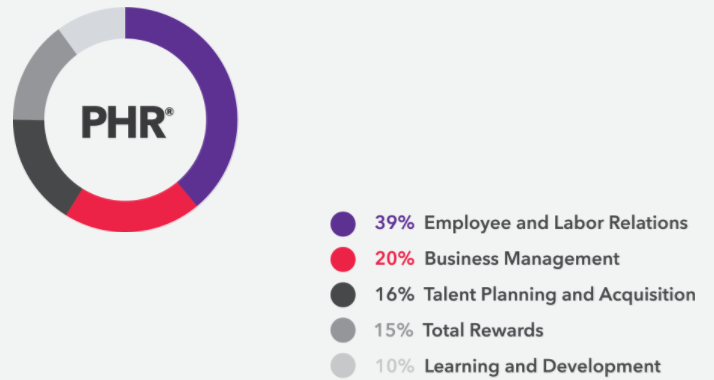
phr exam topics

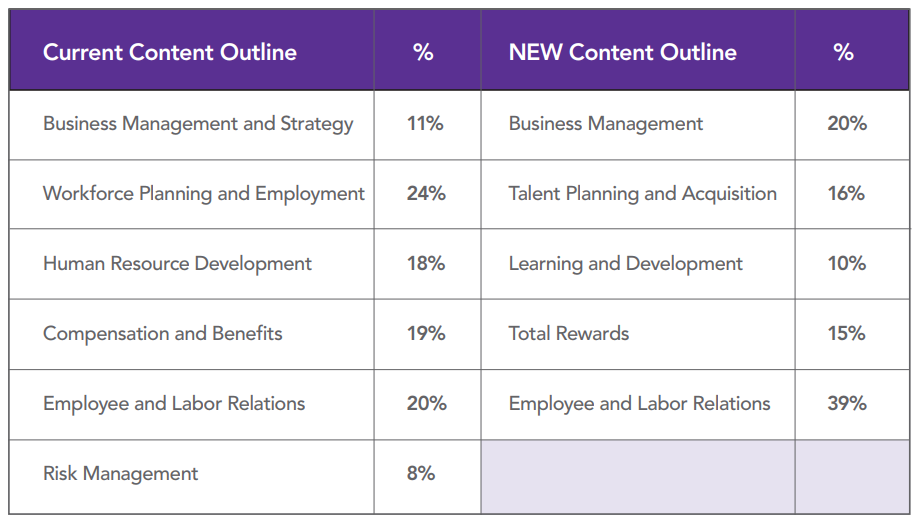
Instead of six sections, the 2018 PHR Exam Content Outline will have five sections with new section names and weightings. The new PHR emphasizes the HR professional’s role in business management, and employee and labor relations. Risk management remains important even though the responsibilities will now fall under the employee and labor relations heading. The changes reflect current HR practices and terminology.

Previously the exam focused on six different areas, and now it shifts down to five. In addition to modernizing some of the titles of the sections (for instance, human resources development always has been about learning and development, but now the title actually says that) the weight of each section has shifted around as well. Here’s the difference:

new phr exam content outline

August 2018 PHR Content Outline Changes

SPHR Changes

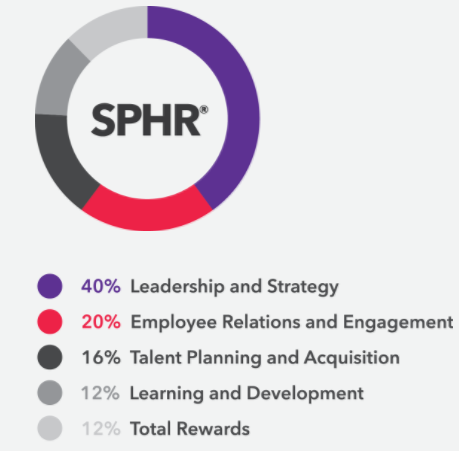
sphr exam topics

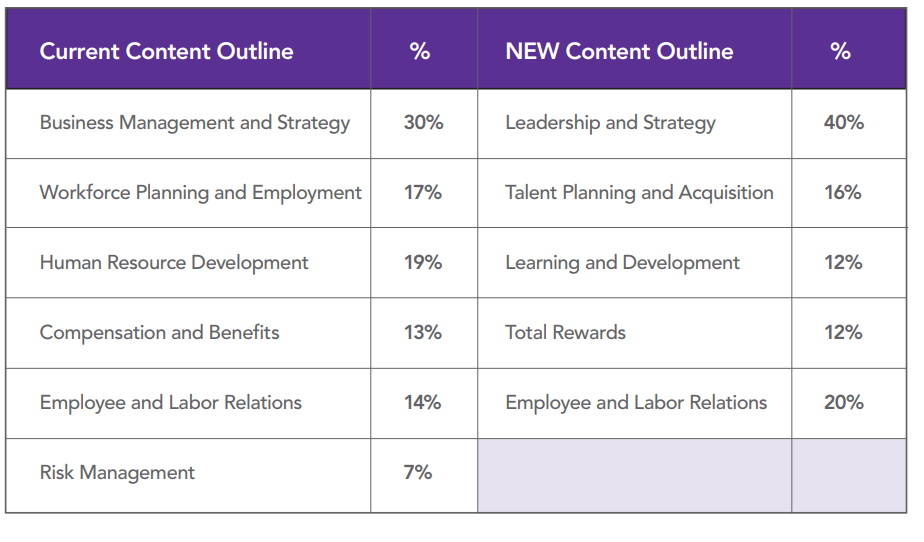
Instead of six sections, the 2018 SPHR Exam Content Outline will have five sections with new section names and weightings. The new SPHR emphasizes the senior HR professional’s role in leadership and strategy, as well as employee relations and engagement. Risk management remains important and is found under the employee relations and engagement section. This section also includes employee performance, labor strategies, and diversity and inclusion.

What surprises me most about this transition is that the SPHR seems to be an executive-focused certification more than before. Reducing nearly every category and heavily weighting the content towards leadership and strategy (it got a 30% bump relative to its previous weighting) means this is by far the biggest chunk of exam content. Here’s the chart outlining the differences in the content:

new sphr exam content outline

August 2018 SPHR Content Outline Changes

If you’re planning on taking the exams in the coming year, make sure you keep in mind that anything through the end of July 2018 is using the old exam topics and layout, and anything starting in August will use the new exam topics and content.

Big announcement!

Between now and August I’ll be completely overhauling the HR certification materials offered through upstartHR. In the last 10 years of helping people with their exams I’ve learned some great lessons on what works (and what doesn’t). I’ve built courses to be very flexible, but tools today are available that can make the entire process even more user friendly.

With the need to change the course content to account for these changes from HRCI, this is an opportunity to dramatically revamp the overall slate of offerings, from the courses to the audio content, to really reflect the needs of today’s HR leaders. And for those of you considering a SHRM certification, don’t feel left out! Lots of students have used the materials to prepare for the SHRM exams because they are situational/practical, not just a bunch of theory like you get with most textbooks (that’s the number one reason people fail the exams, if you didn’t know). The new version will have some SHRM-specific aspects to align with those competencies highlighted by the SHRM certifications.

Anyone that has previously purchased materials will have an opportunity to upgrade to the new content if needed at minimal cost. However, the cost of all courses will increase when we migrate to the new delivery platform due to the cost of creating and maintaining the course content over time. I’ll keep everyone posted in advance of the transition. If you have questions, as always, feel free to reach out to me at ben@upstarthr.com

What are your thoughts on these changes? Do they accurately reflect the realities of HR today?


Article source:Ben - 2018 HRCI Certification Changes: What You Need to Know»

Check out more of Ben Uebanks' work at Upstart HR

Wednesday, 2 May 2018

Guest Article: Ruthlessly Eliminate Hurry by Jay Kuhns, SPHR

The pace. 

My pace...the hectic, busy, sometimes chaotic whirlwind of life can be a bit much at times. Easy to complain about, right? And also, easy to be thankful for in a world with so much pressure. 

Something More
Amidst the noise, deadlines, expectations and overloaded calendars is something else waiting for us. However, we often don't notice this opportunity because we're always "in a hurry."

When we find ourselves asking if all of this craziness is worth it, I wonder if we also ask how we might offer ourselves in a different way? 

That's right. I'm talking about exploring new ways to contribute.


Stop and Listen
Before we can understand how we might contribute beyond our "busy day full of responsibilities" we must first stop. Simply stop for a few moments, and listen. 

What is your heart calling you to do? 

Who has been whispering in your ear about making a change and adding value in ways you had not previously considered?

How will you eliminate the "hurry" in your life, so you can focus on the most important things? New things? Life-changing things?

How About You
Investing a few moments...or a few hours...to just stop and listen could have a profound effect on you, and those around you. 

Do you have the courage to even give it a try; or, will you quickly glance at your To Do List and hurry along to the next task?

I'd love to hear from you.

No Excuses.

pic
Article source:Jay Kuhns, SPHR - Ruthlessly Eliminate Hurry»

Check out more of Jay Kuhns' work at No Excuses HR

Tuesday, 1 May 2018

Guest Article: 5 Research-Backed Performance Management Practices of Great Companies [Webinar] by Ben

Instead of just hating on performance management processes, why don’t we do something about them? We hear a lot of stories about companies with rainbows and unicorns. Everything is perfect and happy. But the reality is most of us have challenges, and this is a real look at the specific practices we can use to improve outcomes.

New insights our team has uncovered at Lighthouse Research reveal a clear distinction between the performance management and engagement practices used at high-performing firms versus their lower-performing peers. The top-performing companies leverage a mixture of recognition, regular conversations, and other practices to create more engaging workplace experiences for their employees, ultimately driving engagement and performance to new heights.

Lighthouse-research-and-advisoryIn this webcast, we’ll look at the research and what it can teach us about how to improve our approach to performance management. More practically, we’ll examine some case studies and stories of companies that have modified their approach to performance management, reaping a variety of rewards. You will learn:

  • the deep links between engagement, performance management, and business results
  • how to adapt performance management practices to improve outcomes
  • how other firms have made the transition, including lessons learned.

This 60-minute training session will be held on Wednesday, May 9th at 11:00am Central. Sign up for the webinar below (subscribers click through to register.


Article source:Ben - 5 Research-Backed Performance Management Practices of Great Companies [Webinar]»

Check out more of Ben Uebanks' work at Upstart HR