Saturday, 6 October 2018

Guest Article: Should Employees be Paid for Commuting Time? by Ben

An interesting piece of research on publicly available WiFi access in England led to a question that made me pause. Should employees be paid for commuting time?

As someone that travels a fair bit for work, I know the value of being able to connect and work from any number of strange locations–restaurants, hotel lobbies, airports, etc. But what about the commutes that make up a significant part of the day for so many workers? From the piece:

Interviews with customers revealed why internet access was as important for commuters as business travellers. Many respondents expressed how they consider their commute as time to ‘catch up’ with work, before or after their traditional working day. This transitional time also enabled people to switch roles, for example from being a parent getting the kids ready for school in the morning to a business director during the day.

Until now, there has been little research to evaluate the impact free Wi-Fi provision has had in the UK, despite government encouragement for companies to provide access on transport networks. The researchers looked to Scandinavia to see how commuting time could be measured differently, and found that in Norway some commuters are able to count travel time as part of their working day.

Dr Juliet Jain told the conference: “If travel time were to count as work time, there would be many social and economic impacts, as well as implications for the rail industry. It may ease commuter pressure on peak hours and allow for more comfort and flexibility around working times. However it may also demand more surveillance and accountability for productivity.”

Changing the Script on Work/Life Balance

Twenty years ago commuters riding on trains and other passive modes of transportation (basically anyone that’s not driving, biking, or walking to work) might have been able to work in some capacity, but it was very limited.

Today, with 24/7 access to networks, resources, etc., the conversation has changed. The very technology that has forced us to have very tough conversations about work/life balance could now offer a small way to add more balance to our lives.

We know that more than 90% of workers say they are LEAST PRODUCTIVE IN THE WORKPLACE, which means they need to find other times and places to be productive and meet their work goals. Could this option to get paid for working during commuting hours change that? What’s your take? Is it a good idea?


Article source:Ben - Should Employees be Paid for Commuting Time?»

Check out more of Ben Uebanks' work at Upstart HR

Friday, 5 October 2018

Guest Article: Finding My Way by Jay Kuhns, SPHR

I'm not exactly sure when it happened, but I've found myself in somewhat of an awkward place. 

Professionally, I have a terrific job with a company that is being recognized in the industry and growing fast. I love human resources work...it just matches everything that I believe is important about the life and success of an organization. 

That all sounds pretty good, right?

But...
Somehow, though, a cynical view has snuck up on me. 

I don't like that. 

I don't want to be someone who complains about the complainers. I don't want to sound like the angry guy who is just another know-it-all. I don't want to be someone who isn't living the way he truly wants to live.

So...I'm doing something about it. A huge part of my personality is based (often times as the brunt of jokes) on being overly positive. Sometimes even missing the reality of a situation because I refuse to see anything but the positive side!

That personality trait...that I have relied on to carry me through for so many years...has become a bit more elusive lately. 

I don't like that either.

Getting Focused
I'm going to dial-in more than ever to what used to be my default reaction, to an intentional, thoughtful response to the world around me. 

Staying positive has to be the starting place. 
Staying positive has to be my go-to style. 
Ending positively has to be the way.

Maybe this all sounds hokey. Probably true. But for me, taking a proactive approach to how I live my life versus my "life living me" is essential. I've taken big steps in my health, faith, nutrition and fitness. Now it's time to lock down the last and most challenging part...

...my mindset.


How About You
What has become elusive in your life? What behaviors have crept in that you want to lock down? Don't be afraid of confronting them...you can do it!

I'd love to hear from you.

No Excuses.

pic
Article source:Jay Kuhns, SPHR - Finding My Way»

Check out more of Jay Kuhns' work at No Excuses HR

Wednesday, 3 October 2018

Guest Article: HR: You're Still Scared to Death of 'Them' by Jay Kuhns, SPHR

I recently attended a human resources conference and found myself leaving a bit disappointed. The conference overall was fine...working hard to find the right balance between content, programming, and sessions to meet the needs of a wide range of leaders from 'brand new' to 'seasoned executives.'

HR Still Out of Touch
What disappointed me however was the nature of the discussion during one particular session on communication. More specifically, communication with our younger employees. The group used the term millennials, although personally I am so sick and tired of generational labels that I'm going to try something new for HR and call them...

...people!

The group spent the majority of the session complaining, venting, and candidly whining like first-time managers about meeting their employee's needs.

Really HR? Still complaining? 

Have you forgotten that...

WE are the people champions of our organizations!

WE are the ones who despise labels and embrace inclusion!

WE are the ones who align and execute people strategies with our company's plans!

WE are the ones who are advocates for corporate culture, employee morale, and overall engagement!

Sadly, it is clear to me that, in the healthcare industry at least, HR appears to have lost it's way.

The Truth Hurts
Has HR remained current with how the world works today? Have any of the contemporary communication tools been adopted by the 'old guard' or are they still hiding behind excuses and fear? 

Some of you may say I'm being too harsh, yet I was the one who watched this embarrassing display of behavior. You may think that I am the one who is out of touch with reality; yet you didn't hear me complain about the future leaders of our world. 

...and yes, those 'younger' employees will ALL be in our jobs one day...so what example are you setting for them?...


How About You
The time has come for a new wave of leaders to take control in HealthcareHR. The brave, the visionaries, the ones who actually want to take action and make a profound difference in an industry that, despite it's massive economic impact, has little to show in the way of true HR executive presence and thought leadership.

Too harsh? Then why don't you do something about it in your organization today?

I'd love to hear from you.

No Excuses.

pic
Article source:Jay Kuhns, SPHR - HR: You're Still Scared to Death of 'Them'»

Check out more of Jay Kuhns' work at No Excuses HR

Friday, 28 September 2018

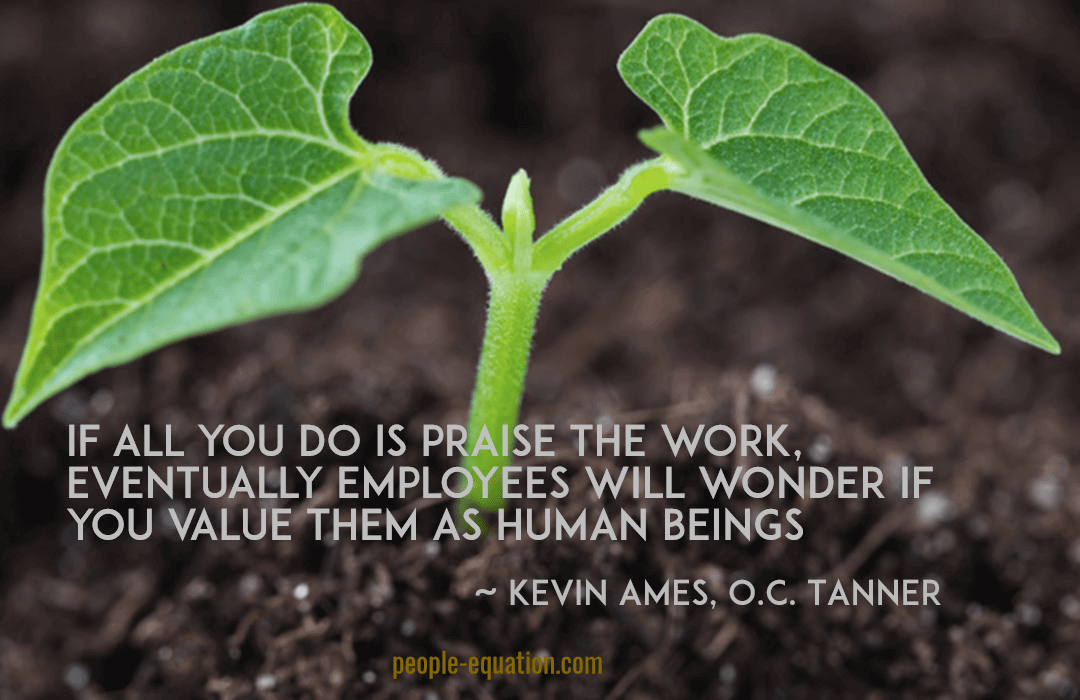
Guest Article: Planting Seeds of Greatness Requires You to SEE the Human in Your Employees by Jennifer Miller

Great leaders are like farmers; they plant seeds of greatness in their employees. Then these leaders provide all the conditions necessary for them to grow. So says Kevin Ames, co-author of Appreciate: Celebrating People, Inspiring Greatness. Ames, who is Director of Speaking and Training for recognition company O.C. Tanner recently spoke at the Influence Greatness 2018 conference.

One of the “seeds” that leaders can plant continuously is that of giving appreciation to your employees. Lucky for you, there is no “planting season” for appreciation—it blooms all year long. As an avid veggie gardener, I appreciate Ames’ metaphor. Further, he provided a distinction that many leaders miss: when praising employees, be sure to see the humanity in their efforts, not just the work they do.

Giving appreciation, says Ames, isn’t part of a company program, it’s a “moment” an employee experiences. And if done correctly, a moment after which the person leaves the interaction feeling appreciated. As such, you need to recognize the person first, then praise the work they do. Remember to say, “I appreciate you” [emphasis is mine] to employees. “If all you do is praise the work, eventually employees will wonder if you value them as human beings,” cautions Ames.

This is a subtle distinction, and one that I haven’t considered very closely. But when I think about it, some of the most effective leaders that I work with have said to me, some form of “Jennifer, I appreciate you.” They also praise the specific work I’ve done, and that’s great to hear. But there is still something so very satisfying about being praised for being you.

Think about the those to whom you will soon have the chance the praise or recognize (kids, colleagues, volunteers . . .) How can you recognize who they are, as well as what they do?

For more on the Influence Greatness Conference, follow the hashtag #greatness18

Disclosure: I attended the Influence Greatness as a guest of O.C. Tanner. I was not required to write anything about the conference.


Article source:Jennifer Miller - Planting Seeds of Greatness Requires You to SEE the Human in Your Employees»

Tuesday, 25 September 2018

Guest Article: For Soon Is Yesterday by Jay Kuhns, SPHR

I've been thinking a lot lately about how I...well...think about things. I like to have a clear understanding of what's behind me, as well as a vision of what's ahead...develop a game plan...execute well...and get to where I just knew I would get to.

Sure.

Back
I easily fall into the trap of looking back at my life, both professionally and personally. What could I change? What might have happened if I took that other job? What about that big decision I made...what if I made a different one?

These back-facing questions are helpful for us to understand things, but aren't necessarily productive if we spend all of our time looking backwards.


Forward
Conversely, I L O V E spending time planning what's next! Big thinking! Big ideas! And best of all..acting on those plans! In my business life this is an area where I get the most satisfaction.

Personally, plans on a massive scale can shift and move resulting in us investing lots of energy on plans instead of embracing the incredible moments that we are blessed with each day.

Of course I want to plan in my private life...but not at the expense of my life.

Are you with me?


How About You
Looking back to learn, and looking ahead to dream are both important parts of our life experience. Those investments of time can help us understand, learn and prepare. But we must not lose sight of the incredible things that happen each day. Those small moments that make life special are so important.

I'm still going to think about everything...but savoring each day is going to take a little higher priority than in the past...what about you?

I'd love to hear from you.

No Excuses.

pic
Article source:Jay Kuhns, SPHR - For Soon Is Yesterday»

Check out more of Jay Kuhns' work at No Excuses HR

Saturday, 22 September 2018

Guest Article: How AI is Changing HR for the Better by Ben

Last week I was one of several thousand people that attended the 2018 HR Technology Conference and Expo in Las Vegas. I had the opportunity to share about my take on the HR Technology landscape as it pertains to AI and automation technology that is affecting recruiting, talent management, core HR, and more.

In the video below, I answer a few key questions about how AI is driving value for employers that leverage it to solve HR and people-related challenges. This is from my upcoming book (now available for presale!) on Artificial Intelligence for HR. It’s a very practical look at where HR is today and how technology can enable us to FINALLY be strategic in ways we’ve always dreamed of by automating some of the simpler, transactional components and “grunt work” that we all have to do on a daily basis.

Plus, I grew a mini beard for HR Tech this year. Enjoy. :-)

I am planning a special presale bonus for the book. If you want to get in on it just sign up over at http://aihrbook.com and I’ll let you know what you can get for being a presale buyer!


Article source:Ben - How AI is Changing HR for the Better»

Check out more of Ben Uebanks' work at Upstart HR

Tuesday, 18 September 2018

Guest Article: How to Become a Modern Elder by Jennifer Miller

It makes for a great fish-out-of-water movie premise: fifty-something worker has to report to a much younger boss and is perplexed with the change in power structure (ala Dennis Quaid’s character in In Good Company.) But it’s not so funny when you are that employee, still feeling vibrant and willing to contribute, and you wonder if younger leaders are undervaluing you.

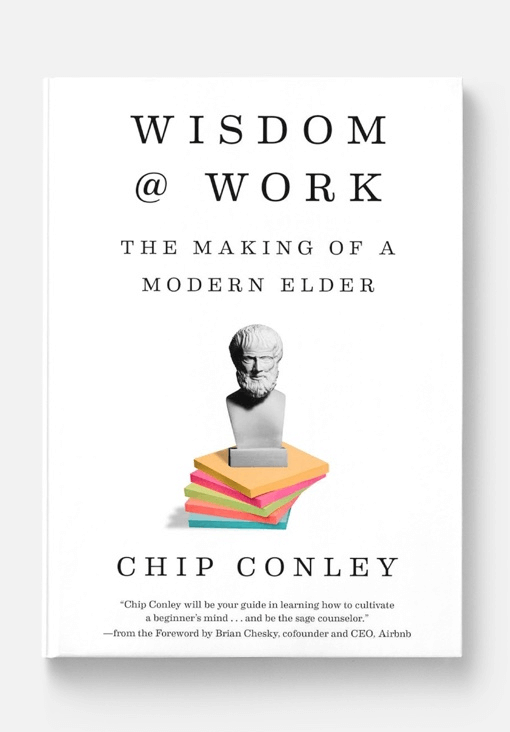
A new book, Wisdom at Work: The Making of a Modern Elder explores members of the workforce who feel this pain. The book, written by 58-year-old Chip Conley, tackles head-on a social dynamic that threatens our workplace. “In a world that venerates the young, many in midcareer sense that the ground is shifting beneath their feet, leaving them feel invisible, undervalued and threatened by the digital natives nipping at their heels,” he writes.

wisdom at workCan you relate? And you don’t even have to reached your sixth decade for this to resonate. In the hyper-youth-oriented tech industry, even 35-year-olds feel the sting of ageism.  “Wisdom at Work” seeks to provide reassurance, along with practical resources, that you are most definitely not too old to contribute. In fact, your age is an asset, if you know how to present it as such.

As a member of the target audience for this book, I was heartened by its message that one’s life experience has value. Conley seeks to liberate the term “elder” from “elderly”, pointing out that the latter is simply how many years you’ve been on this earth, but the former is what you have done with those years. Conley uses the term “Modern Elder” to describe a person who has married their wisdom and experience with curiosity, a beginner’s mind and a willingness to evolve.

Conley has lived the last several years as a Modern Elder in the making. In 2013, at the age of 52, he sold his boutique hotel company and joined Airbnb as head of global hospitality and strategy. His boss (Airbnb’s CEO) was decades younger than him, as were many of the senior management team members. Conley’s experiences as one of the “older guys on the block” led him to explore what it means to age with vitality at work.

Wisdom at Work is Conley’s compilation of  ideas, backed up with demographic data, on how people entering the mid-terms of their work journey can still have meaningful careers. He outlines the characteristics of a Modern Elder (spoiler alert: if you have become complacent, you won’t like a few of his suggestions) and he provides ample anecdotes, examples and reference materials to help you grow in your efforts to see your age as a strength that your employer will value.

I devoured this book. It seems like just yesterday that I was the youngest member of our company’s management team, fresh-faced, energetic and yes, a bit smug about how some of my older colleagues were a bit out of touch. I’m grateful that one of my contemporaries has taken the time to lay out a path for those of us who want to stay relevant. I highly recommend that you pick up a copy of Wisdom at Work.

Chip Conley has created an excellent resource list on this topic. Download the PDF here.

Disclosure: I received a free copy of this book for the purposes of the review. This post also contains an affiliate link, which means if you click the link and make a purchase, I may receive a small compensation.


Article source:Jennifer Miller - How to Become a Modern Elder»