Showing posts with label employee wellbeing. Show all posts

Thursday, 2 June 2016

How to manage your job demands and resources!

Feeling stressed? Overwhelmed? Or just unsure about what your role entails? You could be feeling this way because the demands of your job are high, but the resources you have access to are low. No wonder you might sometimes feel it is hard to do your job effectively! Understanding the various factors which lead you to feeling stressed will help you to become more self-aware and insightful about the certain things within your job which create negative feelings. This is very important! If we can acknowledge and hone in on the specific factors which make our jobs more challenging, it gives us a better opportunity to come up with targeted strategies to help improve these stressors and also means we are better prepared for a conversation with our superiors if we need help managing these challenges. 


The Job Demands-Resources (JD-R) model can be used to predict employee burnout and engagement, and consequently organisational performance.The central assumption of the JD-R model is that job strain develops – irrespective of the type of job or occupation – when (certain) job demands are high and when (certain) job resources are limited. See the diagram below for examples of job demands and job resources and how they can negatively lead to exhaustion (health-impairment process) and disengagement (motivational process).
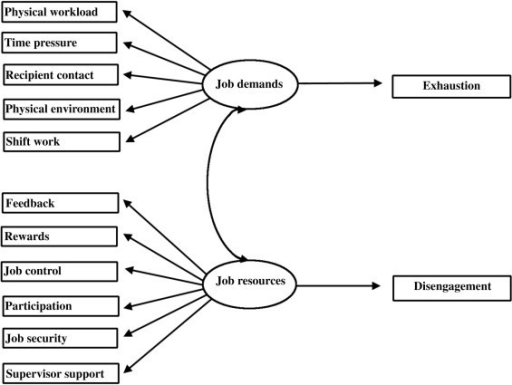


Finding the balance between job demands and appropriate resources can be a challenge for organisations and for employees. For organisations to elicit the best performance from their employees, it is important to provide appropriate resources for employees so that job demands are maintained at level which does not create extra stress or pressure. For employees, it is important to identify what types of job demands can elicit feelings of stress and to combat these negative feelings using evidence-based health and well-being strategies such as mindfulness, exercise, maintaining a healthy diet and getting enough sleep. In other words- keep striving for the sometimes elusive work-life balance!
  

Thursday, 11 February 2016

Simple Strategies to Prevent Workplace Anxiety


Workplace anxiety is more common than you might think. The ‘2014 Stress and Wellbeing in Australia Survey’ conducted by the Australian Psychological Society found ‘issues in the workplace’ was one of the top five sources of stress among Australians aged between 26-45 years, with a massive 44% of Australians identifying work as a key cause of stress. Work related sources of stress can include things like; starting a new job, lack of autonomy, heavy workloads, and poor resources, and limited support. Constant anxiety, worry, apprehension, fear, and feelings of impending doom can arise from stress and be long-lasting, even when the original stressor is gone.


With the fast-paced environments and pressures of meeting client demands, deadlines, and keeping on top of your game, it’s easy to develop work related anxieties. Struggling with anxiety at work can be debilitating; even the simplest tasks can become difficult to complete. Stress is often unavoidable in the working world, but it is helpful to identify key sources of stress, and have some strategies at hand to prevent it developing into a more serious problem.


Here are six simple ways to prevent stress and anxiety in the workplace:

  1. Slow down. Close your eyes and focus on slow, deep breathing for several minutes until you feel yourself physically relax. This will make it easier to focus and gather your thoughts for the task at hand.
  2. Break it up. Sometimes when faced with a difficult situation, rather than tackling it head on, break it down into smaller tasks. That way, you can set goals for getting each part done. Reward yourself by taking a break in between set tasks; go for a quick walk to clear your head.
  3. Exercise. We’ve all heard that exercise plays an important role in keeping mentally healthy, and it’s true. Find and join a gym close by and go before, after or even during work. If you think you can’t handle those spin classes, make an effort to walk to and from work. Not only does being physically active improve mental health, just being outside with some natural greenery has been shown to have positive impacts to emotions and self-esteem. Every bit counts!
  4. Enjoy your social life.  Don’t forget you have a life outside of work. Catch up with friends and family to keep yourself socially active. Organise things for 'after work', so you have something to look forward to and keep you going throughout the day.
  5. Face your anxiety. That feeling of frustration, anger or nervousness might seem normal at first, but when it lasts a little longer than it should, it can be a good idea to talk it out to yourself, write your worries down, and actually stop and think about what is worrying you and accept the stress or anxiety might be more serious than you thought. Self-understanding is important to finding a resolution. If you think it’s weird talking it out to yourself.
  6. Talk to someone else. Find a co-worker, friend, family member or a mental health professional that you are comfortable talking with. Sometimes just saying what you’re going through out loud can bring an immense amount of relief.
Stress is a normal reaction when something at work is a little more demanding or challenging. However, it’s good to learn to recognise the signs when it’s getting a bit too much for you. Many organisations have an Employee Assistance Program available to help employees enhance their health and wellbeing, and some even accommodate leave of absence from work so you can have a day away to mentally recharge. If you’re finding anxiety is getting the better of you, take a minute to discuss your options with your manager or supervisor, or contact a medical professional for extra support.

Thursday, 10 December 2015

SURVIVOR: The Game of One Foot in Front of the Other During December

During Christmas, it is not uncommon to experience financial pressures from debts, gifts and celebrations; family pressures due to hosting or attending gatherings (or a lack thereof). To add to the mounting social pressures, work pressures accumulate as New Year deadlines approach.

Protecting your mental health (and general wellbeing) is vital to your employer to ensure you are able to contribute creatively and productively; and, to ensure that you have the resources to get through the difficult times where your efforts and output (and let’s not forget satisfaction) may suffer.

Here are 3 tips to motivate you and safeguard your general mental health at this time of year:

1. Keep an eye out for red flags

While it is normal to experience a degree of pressure and frustration at this time of year, it’s important to note when this may become a larger problem. If you or a colleague feels sleep deprived, easily angered, anti-social, or generally and uncharacteristically negative, this may be a sign that the stress is becoming overwhelming. If people are reacting to you as if you are acting out of character, seek support and look for resources around you that you can use to your advantage. It’s normal to feel the need to seek support at these times so don’t hesitate in speaking up and finding help where you can if you feel overwhelmed.

2. Review workloads

Stress occurs when our demands exceed our resources. Quite simply, you may not have enough time or the resources to get the job done. Pay close attention to whether your efforts are sloppy or are being completed late, as this may occur due to under-staffing and over-loading rather than a lack of enthusiasm or your competence levels. Communicate these concerns with the team and where necessary, give clients advance notice that deadlines may alter during a resource-restricted period.

3. Seek feedback 

Seeking feedback is a great way to establish how you are performing. Even if you are sure that things are going well, it never hurts to ask and hear it from your managers. A simple word of appreciation can motivate and encourage anyone and, even constructive feedback can be positive for clarifying your role and tasks that are important. You don’t need to organise a long, formal feedback session, even just asking how you went on a project or task that you have just completed is enough. Feel free to talk with your employer about your concerns and inform then that their candid feedback and support could really help.

While Christmas is a stressful time of year for many, effective management through communicating with and supporting those around you can have a snowball effective to put the peace, love and joy (and put your productivity and satisfaction) back into the festive season!

Wednesday, 2 December 2015

You have to be kind to be kind – Employee wellbeing through the Holidays


The old saying “you have to be cruel to be kind” may not be the best advice around the holiday period. Research has found that employee stress and depression levels increase over the Christmas and New Year period. While we understand that giving everyone leave over this time is not always an option, there are ways in which you can support an employee’s wellbeing throughout the festive season

During Christmas, it is not uncommon to experience financial pressures from debts, gifts and celebrations; family pressures due to hosting or attending gatherings (or a lack thereof). To add to the mounting social pressures, work pressures accumulate as New Year deadlines approach.
The mental health (and general wellbeing) of you and your team is vital to ensure you are able to contribute creatively and productively, and avoid droning on to get through difficult times where your efforts and output (and let’s not forget satisfaction) may suffer. 

Here are 3 tips to motivate you and your team to safeguard general mental health at this time of year:

1. Keep an eye out for red flags
While it is normal to experience a degree of pressure and frustration at this time of year, it’s important to note when this may become a larger problem for some employees. If a colleague (or yourself) appears sleep deprived, aggressive, anti-social, or negative, or may just appear down, this may be a sign that the stress they are experiencing is at an unreasonable level.  

If you see someone acting out of character for a long period of time, let them know you’ve noticed their behaviour is different and ask them how things are going. Be prepared to hear the response when you ask someone if they are ‘OK’, whether their response is positive or negative. They do not expect you to be able to fix their problems; all you need to do is listen as often people just need to talk something through. 

2. A little empathy or gratitude goes a long way
It cannot be overstated – a simple word of appreciation or understanding can motivate and encourage anyone. You don’t need to organise an elaborate event to thank work colleagues, as genuine personal encouragement can be enough to brighten their day or change their perspective. Go beyond sending an email - genuine communications are best done face-to-face; or, if you are competing with different locations, then a phone call is appropriate. 

3. If possible, review workloads
Stress occurs when our demands exceed our resources. Quite simply, staff may not have enough time or the resources to get the job done to the required standard. Pay close attention to whether work is being completed late or to a reduced standard than normal. Issues such as these may occur due to under-staffing and over-loading rather than a lack of enthusiasm or competence. Communicate these concerns with employees and investigate the cause of any issues. A good analysis to establish the root-cause of an issue is asking “why” 5 times to a response.

While Christmas is a stressful time of year for many, effective management through communicating with and supporting those around you can have a snowball effective to put the peace, love and joy (and the employee productivity and satisfaction) back into the festive season! 


Tuesday, 20 October 2015

4 Strategies to Prevent Workplace Bullying


While workplace bullying tends to be an issue that is not often discussed unless a formal complaint is made, it is the employer’s legal responsibility to provide an environment that is free of any unreasonable treatment of employees. A culture of bullying behaviours can be detrimental to productivity levels, staff retention and overall success of the business. This article explores four ways in which you can prevent bullying in your workplace.

1.  Set a good example.  

First and foremost, treat your employees as you would like to be treated. Embodying respect and courtesy will influence the work environment, assisting in the replication of those behaviours amongst the staff.

2.  Regular check-ins. 

Provide weekly opportunities for you employees to touch base with you. This is a great chance to develop a trusting rapport between you and your staff. As a result, they should feel comfortable enough to speak with you about any issues that may be affecting their time at work.

3.  Develop anti-bullying policies. 

Work with your team to develop expectations of how staff should conduct themselves. Set a clear definition of bullying, and also make evident the company’s stance on bullying behaviour. These policies can be communicated through posters placed around the workplace, as well as discussed during staff induction procedures. By doing this, your employees have set behavioural expectations to follow, and can be held accountable if they deviate from them.

4.  Implement reporting procedures. 

A worker is more likely to report workplace bullying if there are report writing processes in place. Develop reports that can be used to lodge a bullying complaint, and also make sure that such reports are followed as soon as they are sent in. Ensure that confidentiality and impartiality are values that are continually re-enforced.

It’s never too late to implement strategies that can prevent bullying in your workplace.

For more information on how you can address workplace bullying, visit www.safeworkaustralia.gov.au


Tuesday, 11 August 2015

Implementing a Health and Wellbeing Policy For the Work Place

Whether you work for a large or small company, implementing a health and wellbeing policy for the workplace is a great idea in order to get your staff feeling healthier and happier at work. In turn, this will also make them more productive, reduce the number of sick days, reduce turnover, and increase profits. It’s not always easy to devise a health and wellbeing program in your workplace but thankfully we can find many examples of these on government websites. One such example of a health and wellbeing policy template can be found here:
http://healthierworkplacewa.com.au/media/3739/generic-health-and-wellbeing-policy-template.pdf

Applying a health and wellbeing program has not received a great deal of attention, so in this article we will give you some helpful hints and tips that ensure your policy will be long lasting and successful.

Promote your program


The first step in implementing the program is to promote your program. Raise awareness of some of the health issues that are related to what you’re specifically trying to target, such as diabetes and obesity with diet or cardiovascular disease by promoting exercise. In order to have a successful program you have to start a buzz in the workplace that gets people seeing the program in a positive light – you may have heard this as creating a burning platform. The key is to get your management and some key players within your organisation on board. This can be as simple as having health posters around the office, or having a program launch with some inspiring speakers to come along and promote the health benefits.

Manage your program


Putting your plan in action is one of the most fun and exciting stages, however, to make sure it stays on a ‘can do’ basis it is important to make sure everyone is on the same page and that ongoing activities are coordinated efficiently. It is important to have ongoing contact with the staff members that are involved, this can be done by holding meetings monthly, fortnightly or whatever is most convenient. This will help you to assess any issues with the program and any modifications that could be made to make it easier for employees to be healthy.


Evaluate and make improvements


Evaluating the program is a necessity in order to help identify the things that are working well and things that weren’t received too well by employees and can be reduced or excluded in future. On top of this, it is useful to have an idea of what worked well so that you don’t make any unnecessary changes that may deteriorate the quality of the program, such as with exercise or food. A great tool for this is to have informal chats on lunch breaks or when bumping into participating staff in the office. It is important to ask yourself (and anyone else helping to evaluate) did everything go to plan? Did it make a noticeable impact? Were the outcomes as desirable as expected?

The workplace is a great environment in which to promote and improve health and wellbeing. Implementing a health and wellbeing policy in your workplace will help your staff to be happier and healthier and will also improve your organisation as a whole. That sounds like a policy worth investing in to me!

Tuesday, 16 June 2015

Mindfulness - reducing stress and improving communication in the workplace

As a society our overall wellbeing is decreasing. Findings by the Australian Psychology Society
detailed that in 2013, the rate of stress, depression, and anxiety reported among people had risen compared to the previous two years of research. In particular, younger people are seen to be reporting the negative symptoms of depression and anxiety at a higher rate than their older peers. Furthermore, workplace wellbeing was also reported as lower compared with previous years.

With the rate of mental health issues rising, large companies have begun utilising Mindfulness in the workplace to ensure they give their employees the best possible chance to be resilient and self-sufficient in neutralising the daily stressors that they encounter.


What is Mindfulness?

Mindfulness is non-judgemental, open and curious awareness of oneself in the present moment; such as awareness of our thoughts, emotions, and reactions. Research shows that developing this level of introspection has positive effects for reducing stress levels, regulating emotions and emotional reactions, promoting enhanced decision making, and decreasing negative thought patterns which can interrupt positive functioning throughout the day.


Mindfulness in the Workplace

Seeing the positive effects mindfulness training can provide, it is no wonder that large companies such as Apple and Google (among many others) are arming their employees with the skills mindfulness can provide. Increasing effectiveness at work, the ability to handle conflict better through emotional regulation, and decreased workplace tension are just some of the benefits that implementing mindfulness practices offer. A prime example of mindfulness implementation within the workplace is Google; who run seven-week long classes for employees to focus on developing mindfulness skills useful for dealing with the stressful corporate world. Although smaller companies won’t have the resources for a seven week long course, introducing simple mindfulness techniques to employees can still have resounding results in helping reduce stress and improve the wellbeing of employees.

In any industry, increasing the wellbeing of employees is always of benefit to a company. Through the techniques of mindfulness, the added development of increased emotional stability and positive thought patterns will only improve morale and the company environment.