Showing posts with label health and wellbeing. Show all posts

Thursday, 2 June 2016

How to manage your job demands and resources!

Feeling stressed? Overwhelmed? Or just unsure about what your role entails? You could be feeling this way because the demands of your job are high, but the resources you have access to are low. No wonder you might sometimes feel it is hard to do your job effectively! Understanding the various factors which lead you to feeling stressed will help you to become more self-aware and insightful about the certain things within your job which create negative feelings. This is very important! If we can acknowledge and hone in on the specific factors which make our jobs more challenging, it gives us a better opportunity to come up with targeted strategies to help improve these stressors and also means we are better prepared for a conversation with our superiors if we need help managing these challenges. 


The Job Demands-Resources (JD-R) model can be used to predict employee burnout and engagement, and consequently organisational performance.The central assumption of the JD-R model is that job strain develops – irrespective of the type of job or occupation – when (certain) job demands are high and when (certain) job resources are limited. See the diagram below for examples of job demands and job resources and how they can negatively lead to exhaustion (health-impairment process) and disengagement (motivational process).
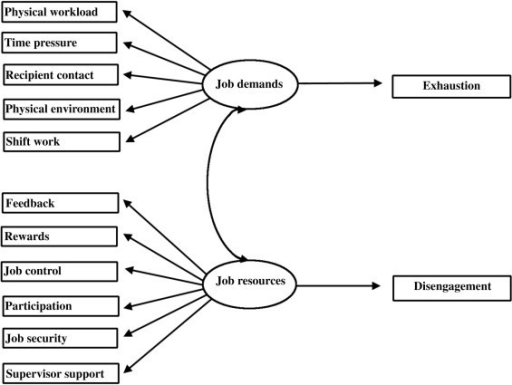


Finding the balance between job demands and appropriate resources can be a challenge for organisations and for employees. For organisations to elicit the best performance from their employees, it is important to provide appropriate resources for employees so that job demands are maintained at level which does not create extra stress or pressure. For employees, it is important to identify what types of job demands can elicit feelings of stress and to combat these negative feelings using evidence-based health and well-being strategies such as mindfulness, exercise, maintaining a healthy diet and getting enough sleep. In other words- keep striving for the sometimes elusive work-life balance!
  

Thursday, 10 December 2015

SURVIVOR: The Game of One Foot in Front of the Other During December

During Christmas, it is not uncommon to experience financial pressures from debts, gifts and celebrations; family pressures due to hosting or attending gatherings (or a lack thereof). To add to the mounting social pressures, work pressures accumulate as New Year deadlines approach.

Protecting your mental health (and general wellbeing) is vital to your employer to ensure you are able to contribute creatively and productively; and, to ensure that you have the resources to get through the difficult times where your efforts and output (and let’s not forget satisfaction) may suffer.

Here are 3 tips to motivate you and safeguard your general mental health at this time of year:

1. Keep an eye out for red flags

While it is normal to experience a degree of pressure and frustration at this time of year, it’s important to note when this may become a larger problem. If you or a colleague feels sleep deprived, easily angered, anti-social, or generally and uncharacteristically negative, this may be a sign that the stress is becoming overwhelming. If people are reacting to you as if you are acting out of character, seek support and look for resources around you that you can use to your advantage. It’s normal to feel the need to seek support at these times so don’t hesitate in speaking up and finding help where you can if you feel overwhelmed.

2. Review workloads

Stress occurs when our demands exceed our resources. Quite simply, you may not have enough time or the resources to get the job done. Pay close attention to whether your efforts are sloppy or are being completed late, as this may occur due to under-staffing and over-loading rather than a lack of enthusiasm or your competence levels. Communicate these concerns with the team and where necessary, give clients advance notice that deadlines may alter during a resource-restricted period.

3. Seek feedback 

Seeking feedback is a great way to establish how you are performing. Even if you are sure that things are going well, it never hurts to ask and hear it from your managers. A simple word of appreciation can motivate and encourage anyone and, even constructive feedback can be positive for clarifying your role and tasks that are important. You don’t need to organise a long, formal feedback session, even just asking how you went on a project or task that you have just completed is enough. Feel free to talk with your employer about your concerns and inform then that their candid feedback and support could really help.

While Christmas is a stressful time of year for many, effective management through communicating with and supporting those around you can have a snowball effective to put the peace, love and joy (and put your productivity and satisfaction) back into the festive season!

Wednesday, 2 December 2015

You have to be kind to be kind – Employee wellbeing through the Holidays


The old saying “you have to be cruel to be kind” may not be the best advice around the holiday period. Research has found that employee stress and depression levels increase over the Christmas and New Year period. While we understand that giving everyone leave over this time is not always an option, there are ways in which you can support an employee’s wellbeing throughout the festive season

During Christmas, it is not uncommon to experience financial pressures from debts, gifts and celebrations; family pressures due to hosting or attending gatherings (or a lack thereof). To add to the mounting social pressures, work pressures accumulate as New Year deadlines approach.
The mental health (and general wellbeing) of you and your team is vital to ensure you are able to contribute creatively and productively, and avoid droning on to get through difficult times where your efforts and output (and let’s not forget satisfaction) may suffer. 

Here are 3 tips to motivate you and your team to safeguard general mental health at this time of year:

1. Keep an eye out for red flags
While it is normal to experience a degree of pressure and frustration at this time of year, it’s important to note when this may become a larger problem for some employees. If a colleague (or yourself) appears sleep deprived, aggressive, anti-social, or negative, or may just appear down, this may be a sign that the stress they are experiencing is at an unreasonable level.  

If you see someone acting out of character for a long period of time, let them know you’ve noticed their behaviour is different and ask them how things are going. Be prepared to hear the response when you ask someone if they are ‘OK’, whether their response is positive or negative. They do not expect you to be able to fix their problems; all you need to do is listen as often people just need to talk something through. 

2. A little empathy or gratitude goes a long way
It cannot be overstated – a simple word of appreciation or understanding can motivate and encourage anyone. You don’t need to organise an elaborate event to thank work colleagues, as genuine personal encouragement can be enough to brighten their day or change their perspective. Go beyond sending an email - genuine communications are best done face-to-face; or, if you are competing with different locations, then a phone call is appropriate. 

3. If possible, review workloads
Stress occurs when our demands exceed our resources. Quite simply, staff may not have enough time or the resources to get the job done to the required standard. Pay close attention to whether work is being completed late or to a reduced standard than normal. Issues such as these may occur due to under-staffing and over-loading rather than a lack of enthusiasm or competence. Communicate these concerns with employees and investigate the cause of any issues. A good analysis to establish the root-cause of an issue is asking “why” 5 times to a response.

While Christmas is a stressful time of year for many, effective management through communicating with and supporting those around you can have a snowball effective to put the peace, love and joy (and the employee productivity and satisfaction) back into the festive season! 


Tuesday, 11 August 2015

Implementing a Health and Wellbeing Policy For the Work Place

Whether you work for a large or small company, implementing a health and wellbeing policy for the workplace is a great idea in order to get your staff feeling healthier and happier at work. In turn, this will also make them more productive, reduce the number of sick days, reduce turnover, and increase profits. It’s not always easy to devise a health and wellbeing program in your workplace but thankfully we can find many examples of these on government websites. One such example of a health and wellbeing policy template can be found here:
http://healthierworkplacewa.com.au/media/3739/generic-health-and-wellbeing-policy-template.pdf

Applying a health and wellbeing program has not received a great deal of attention, so in this article we will give you some helpful hints and tips that ensure your policy will be long lasting and successful.

Promote your program


The first step in implementing the program is to promote your program. Raise awareness of some of the health issues that are related to what you’re specifically trying to target, such as diabetes and obesity with diet or cardiovascular disease by promoting exercise. In order to have a successful program you have to start a buzz in the workplace that gets people seeing the program in a positive light – you may have heard this as creating a burning platform. The key is to get your management and some key players within your organisation on board. This can be as simple as having health posters around the office, or having a program launch with some inspiring speakers to come along and promote the health benefits.

Manage your program


Putting your plan in action is one of the most fun and exciting stages, however, to make sure it stays on a ‘can do’ basis it is important to make sure everyone is on the same page and that ongoing activities are coordinated efficiently. It is important to have ongoing contact with the staff members that are involved, this can be done by holding meetings monthly, fortnightly or whatever is most convenient. This will help you to assess any issues with the program and any modifications that could be made to make it easier for employees to be healthy.


Evaluate and make improvements


Evaluating the program is a necessity in order to help identify the things that are working well and things that weren’t received too well by employees and can be reduced or excluded in future. On top of this, it is useful to have an idea of what worked well so that you don’t make any unnecessary changes that may deteriorate the quality of the program, such as with exercise or food. A great tool for this is to have informal chats on lunch breaks or when bumping into participating staff in the office. It is important to ask yourself (and anyone else helping to evaluate) did everything go to plan? Did it make a noticeable impact? Were the outcomes as desirable as expected?

The workplace is a great environment in which to promote and improve health and wellbeing. Implementing a health and wellbeing policy in your workplace will help your staff to be happier and healthier and will also improve your organisation as a whole. That sounds like a policy worth investing in to me!

Tuesday, 16 June 2015

Mindfulness - reducing stress and improving communication in the workplace

As a society our overall wellbeing is decreasing. Findings by the Australian Psychology Society
detailed that in 2013, the rate of stress, depression, and anxiety reported among people had risen compared to the previous two years of research. In particular, younger people are seen to be reporting the negative symptoms of depression and anxiety at a higher rate than their older peers. Furthermore, workplace wellbeing was also reported as lower compared with previous years.

With the rate of mental health issues rising, large companies have begun utilising Mindfulness in the workplace to ensure they give their employees the best possible chance to be resilient and self-sufficient in neutralising the daily stressors that they encounter.


What is Mindfulness?

Mindfulness is non-judgemental, open and curious awareness of oneself in the present moment; such as awareness of our thoughts, emotions, and reactions. Research shows that developing this level of introspection has positive effects for reducing stress levels, regulating emotions and emotional reactions, promoting enhanced decision making, and decreasing negative thought patterns which can interrupt positive functioning throughout the day.


Mindfulness in the Workplace

Seeing the positive effects mindfulness training can provide, it is no wonder that large companies such as Apple and Google (among many others) are arming their employees with the skills mindfulness can provide. Increasing effectiveness at work, the ability to handle conflict better through emotional regulation, and decreased workplace tension are just some of the benefits that implementing mindfulness practices offer. A prime example of mindfulness implementation within the workplace is Google; who run seven-week long classes for employees to focus on developing mindfulness skills useful for dealing with the stressful corporate world. Although smaller companies won’t have the resources for a seven week long course, introducing simple mindfulness techniques to employees can still have resounding results in helping reduce stress and improve the wellbeing of employees.

In any industry, increasing the wellbeing of employees is always of benefit to a company. Through the techniques of mindfulness, the added development of increased emotional stability and positive thought patterns will only improve morale and the company environment.

Monday, 4 August 2014

Office laughing and why we should


Feeling a little bit low? Try laughing more! The term "laughter is the best medicine" is often touted a lot, but upon looking into the benefits of how it can help you feel better and get you back on track during times of stress it is definitely worth taking seriously. Several research claims cover how laughing is beneficial to your physical health, including improved blood flow, immune response, endorphin levels and sleep quality; but what about mental health?


Here are 3 ways that laughter can benefit your wellbeing: 


1. Laughter dissipates distressing emotions – Rather than expressing negative emotions such as fear, anger and sadness, people often store their negative emotions. But laughter is a perfect way to let those negative emotions go. In short, laughter is very much cathartic. An example of this is when you are feeling stressed or upset; you watch a funny movie so you can laugh away negative emotions. After you watch the movie, you realise you are no longer pent up with negative emotions.


2. Humour changes perspective Laughing helps you see events in a more realistic and less threatening light.  A humorous perspective creates psychological distance and this can help you avoid feeling overwhelmed. More and more mental health professionals are suggesting ‘laugh therapy’ which teaches people to laugh openly at things that are not usually funny and to cope with difficult situations by employing humour. (Just don't laugh openly at a client's issues!)


3. Laughing helps learning and creativity – Daniel Goleman, psychologist, noted that laughter seems to help people think more broadly and associate more freely.  Listening to jokes or even working out a new punch line for a pun activates different areas of the brain and keeps the brain on its toes. In short, you tend to be more innovative and flexible.


Now that you know that laughter works wonders on your mind, how do you bring more laughter in your personal life or workplace? Here are 3 simple ways to make a head start on developing a healthier mind: 


1. Create opportunities to laugh. This is easier than it seems, and just requires a little kick and reminder when you're going through stressful times. Host a game night with friends or work colleagues. Share a good joke or funny story with others. Visit a comedy club for your next team outing. Attend a “laughter yoga” class, or ever better – run one in the workplace! Play with a pet. Check out the humour section of the bookstore. Make watching funny cat videos a daily habit.


 2. Try laughing at events instead of lamenting them. No one likes a grouch or sourpuss that takes everything too seriously and never laughs at anything.  Some situations in life are clearly sad and not meant for laughing but there are also situations that fall into a grey area, giving you the choice to laugh.  Look for the humour in a situation and uncover the irony and silliness of life. Slowly, you will find the humour in everyday events and you will generally develop a brighter perspective.

 3. Surround yourself with funny and playful people. This is probably the easiest way to find laughter. These people are walking reminders to lighten up your day. Their playful point of view and laughter are contagious; stick with them in every chance you get and you will feel more energised and ready for new challenges. 

Incorporating more laughter into both your personal and professional life can have numerous benefits, so make an effort and start today! If you have any advice or examples of lightening up the environment around you during stressful times, we'd love to hear them!

Thursday, 26 June 2014

4 tips for a healthier workplace


Is your company making you sick? Been stuck in that uncomfortable office chair all day? Becoming
accustomed to the sounds of colleagues sniffling their way through flu season or are you tempted on a regular basis by nearby snacks to get you through the day? 

If you answered yes to one or more of those then don't panic, but your workplace may be having a negative effect on your health, and in turn may be affecting your productivity and even desire to work! There are some simple changes all leaders and individuals should incorporate into daily routines to combat the wrath of the unhealthy workplace:


      Get out of the chair

Sitting is the new smoking. No really, if you’re like most office workers and are sedentary for more than 6 hours a day, you’re putting your health at risk. Research suggests that our fat burning mechanisms switch off when we’re inactive, consequently we’re putting the sit into obesity. Set aside some time after completing major tasks and go for a walk around your office.Talking to others around the office, and using your lunch break to get some fresh air will also help to keep your mind fresh and ready for the day's challenges!


     Avoid Temptation
When you're day is feeling extra repetitive it can become all too simple to take frequent walks to the fridge or food table. Test out that will power against unhealthy snack choices, you know you have it in you. Better still; bring simple pre-prepared snacks to work from home. It’s a full proof plan; you’ll have healthy snacks to scrape you past 3:30-itis and you’ll save money!


     Hygiene
Is there anything more soothing than the background noise of sniffling and coughing in the office? Well that’s debatable! We can’t control our colleagues but we CAN protect ourselves from contracting that dreaded flu. Practicing good hygiene and hand washing is always important, but even more so in the winter months, or when a bug is going around the office.


      Walking meetings
 Have you ever considered going for a walk outside the office with a colleague to discuss your ideas? It’s a productive and healthy alternative, so long as your walking meeting doesn’t turn into a conversation about what shocking revelation took place on your favourite TV show last night. Who knows, the fresh air might motivate you into realising new and interesting ideas.


A lot of these tips are centered around getting up and getting moving but it’s of paramount importance. Australians now spend the equivalent of a full working week sitting down. This may seem alarming for some but does anyone actually spend much time out of their chair at work? If you focus on all of the above tips you will be well on your way to jumping back onto the health bandwagon.